
Walking floor cover
Walking floor trailer insurance for bulk loads that unload themselves
Moving-floor trailers hauling waste, RDF, woodchip, biomass, crops or feed. One short form reaches specialist HGV brokers.
- Tractor unit and trailer
- Waste, biomass or farm loads
- Own account or haulage
Quick answer
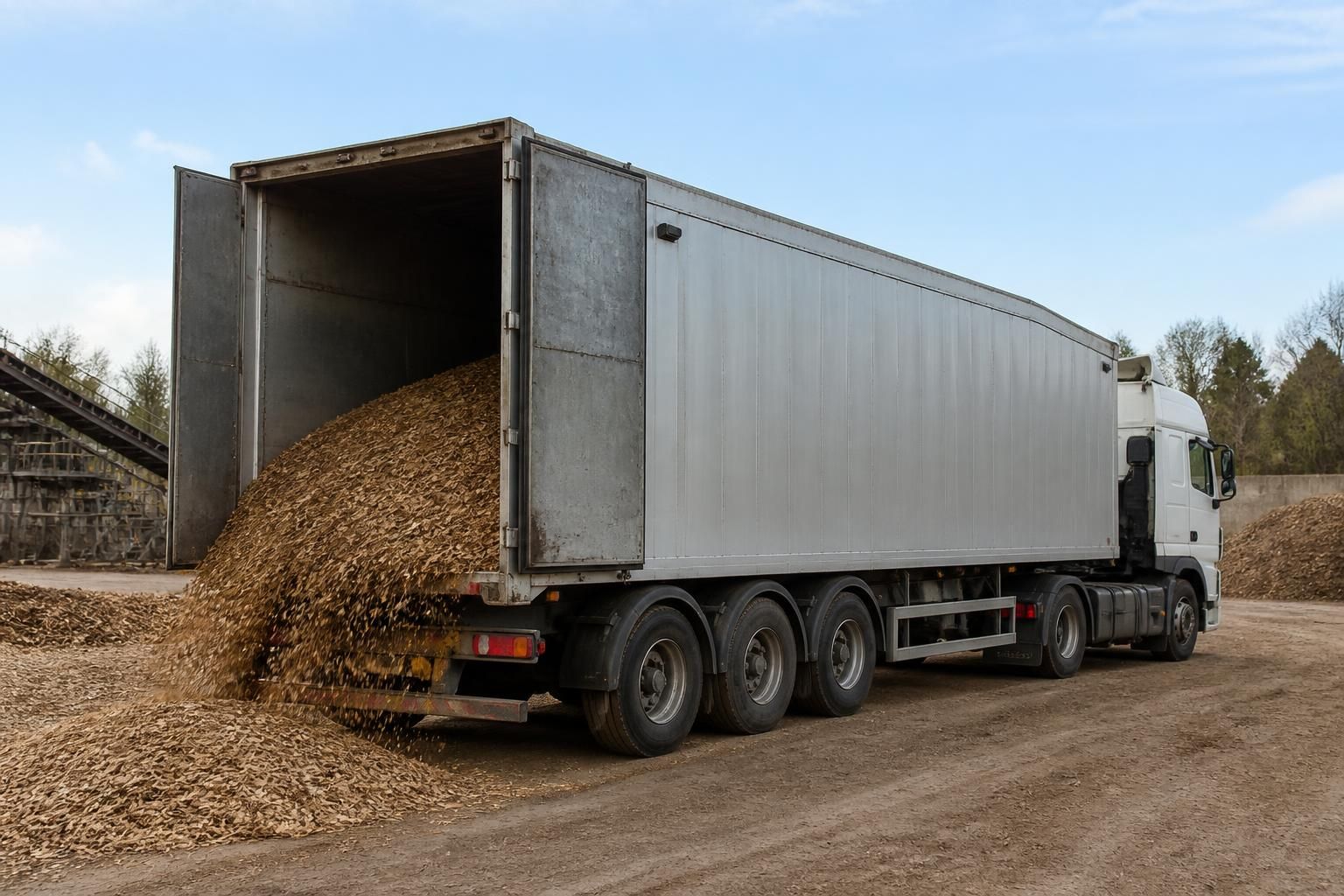
Walking floor trailer insurance covers a bulk semi-trailer with a hydraulic moving floor, and often the tractor unit that pulls it, against road risks, damage, theft and fire. The floor slats shuffle the load out of the back without raising the body. Insurers want to know what goes in the trailer, because waste, refuse-derived fuel and woodchip carry a fire risk that grain or potatoes do not, and whether the hydraulic floor itself is covered if it fails.
Walking floor cover at a glance
- The tractor unit and the trailer can be insured on one policy or on two, and the trailer is often hired or swapped.
- Breakdown or wear of the moving floor and its hydraulics is commonly left out of a standard trailer policy.
- Loads such as RDF, woodchip and damp biomass can heat up or catch fire, so the cargo shapes the price.
- Carrying waste in the course of business, for others or your own firm, generally means holding waste carrier registration as well as the right operator licence.
- A trailer that switches between waste and feed may face questions about cleaning between loads.
What walking floor trailer insurance covers
A moving-floor outfit is two machines joined at the fifth wheel. Cover tends to split along that line, with the tractor unit on a motor policy and the trailer insured as a separate item or an extension.
Walking floor trailer types and what insurers look at
Moving floors are fitted to several body styles, and the way a trailer is loaded and sheeted affects both its value and the loads it can take.
| Trailer type | Typical loads | What insurers look at |
|---|---|---|
| Bulk trailer with rear barn doors | Refuse-derived fuel, baled and loose waste, shredded wood | Fire risk in the load, door and seal condition, site access |
| Top-loading trailer with a roll-over sheet | Woodchip, biomass, grain and feed loaded by shovel or conveyor | Sheet mechanism, overloading, contamination between loads |
| Curtainside trailer with a moving floor | Bales and palletised goods as well as loose bulk | Mixed use, load security, value of the curtain and floor |
| Moving-floor rigid or drawbar body | Shorter runs of waste, feed or produce into tight yards | Body value on the chassis, hydraulic power source, drivers |
Bulk work in tipping bodies is covered on tipper lorry insurance, and container-based waste collection on hook loader insurance.
Moving your own material or hauling for others
The same trailer can be run by a recycling plant shifting its own output or by a haulier paid to carry other firms' waste and biomass. Insurers price those two very differently.
Own account bulk
A sawmill, farm, feed mill or waste site moving its own material usually declares carriage of own goods and runs on a restricted operator licence and, where the material is waste, registration as a waste carrier. See own goods cover.
Bulk haulage
Moving customers' loads for payment calls for haulage use, a standard operator licence and, for waste, registration as a waste carrier. See haulier insurance.
Which class of use fits carrying other firms' RDF or woodchip for a fee?
- NoSocial, domestic and pleasureDoes not fit any walking floor work.
- NoCarriage of own goodsOnly material that belongs to your own business.
- YesHaulage, or hire and rewardCustomers' bulk loads carried and discharged for payment.
Paperwork brokers often request
Waste hauliers are generally expected to hold waste carrier registration with the relevant environment regulator and to keep waste transfer notes for the loads they carry. Brokers may ask for that registration, your operator licence and recent trailer inspection records, so having them to hand makes it quicker to start a walking floor quote (opens in a new tab).
What affects the price of walking floor trailer insurance
Two outfits that look alike on the road can be rated far apart once the insurer knows what they carry and where they discharge.
In the trailer
Self-heating woodchip, RDF that may hide batteries, wet biomass and dusty feed all carry their own fire and contamination risks.
At the discharge point
Reversing into busy reception halls, soft farm yards and tight biomass plant bays raises the chance of knocks and injuries.
- Load typeWaste and refuse-derived fuel are viewed as higher risk than clean agricultural produce or feed.
- Trailer valueMoving-floor trailers cost more than plain bulk trailers, and the floor adds to repair bills after damage.
- Floor maintenanceRecords of slat, seal and hydraulic servicing help show the floor is looked after.
- Overnight parkingLoaded trailers left in yards raise questions about fire and theft, especially with combustible cargo. Yards with several outfits may suit HGV fleet insurance.
- DriversExperience with articulated vehicles and with discharging at waste and biomass sites counts.
- Claims historyPrevious load fires, floor failures and reversing incidents all weigh on renewal.
Cover that often sits alongside walking floor insurance
A walking floor operation runs into risks on the road, in the yard and at the customer's site. These covers fill the gaps a vehicle policy may leave.
Before you buy
Questions worth asking about walking floor cover
Policies for moving-floor outfits differ most on the floor, the load and who owns the trailer. The questions below tend to come up with brokers while terms are still being drawn up.
- Is the moving floor covered if it fails?Sudden damage and gradual wear are often treated differently, and hydraulic breakdown may need an extension.
- Does fire in the load count?A fire that starts in woodchip or RDF may sit under different terms from a vehicle fire.
- Are hired and interchanged trailers included?Some policies cover any trailer attached to the unit, others only named ones.
- Is waste excluded from goods in transit?Some transit policies limit or exclude waste, which matters to a waste haulier.
- What is the trailer insured for?Agreed value, market value and new-for-old terms give very different settlements on a newer trailer.
- Are loaded trailers covered when parked?Conditions on secure yards or time limits for leaving a loaded trailer can apply.
- Is the tractor unit's wet kit included?The pump and hydraulic lines that drive the floor may be treated as part of the unit or as equipment.
- Is the use declared to fit the work?Moving your own material and carrying for customers are declared differently.
How it works
How to get a walking floor trailer insurance quote
HGV Insure is an information site, not an insurer or a broker. We link you to MyMoneyComparison.com, a comparison service that can put walking floor operators in touch with specialist brokers.
- 1
The quote form
Get my walking floor quote takes you to MyMoneyComparison.com, our comparison service.
- 2
Your walking floor outfit and the loads
The form asks about the tractor unit, its weight, your operator licence and who drives. The broker can then go through the trailer, the floor and what you haul.
- 3
Options from a broker
A specialist broker gets in touch with options for the unit and trailer, subject to insurers' acceptance criteria. There is no obligation to buy.
FAQs
Walking floor trailer insurance FAQs
What is a walking floor trailer?
It is a bulk semi-trailer whose floor is made of long slats driven by hydraulic cylinders. The slats move towards the rear doors together and draw back in groups, so the load creeps out of the rear doors while the trailer stays flat. It is also called a moving floor or live floor trailer.
Is walking floor insurance different from ordinary trailer insurance?
It uses the same building blocks, but insurers look harder at the value of the floor, the hydraulics and the loads carried. A plain trailer policy may not include floor breakdown or fire starting in the cargo.
Do I insure the tractor unit and the trailer together?
Either can work. Some operators put both on one policy, while others insure units and trailers separately, which can suit a yard where trailers are swapped between units or hired in.
Is the hydraulic floor covered if it breaks down?
Often not under standard terms. Accidental damage to the floor is usually included, but wear, slat failure from age and hydraulic breakdown are commonly excluded unless an extension is added.
Why do insurers ask about fire with woodchip and RDF?
Woodchip and damp biomass can heat up as they sit, and waste or refuse-derived fuel may contain batteries or other items that ignite. A load fire can destroy the trailer and spread to the unit or a building, so the cargo type changes the risk.
Do I need waste carrier registration to haul waste in a walking floor trailer?
Carrying waste as part of a business generally requires registration as a waste carrier with the relevant environment regulator, and brokers often ask for the registration details. Clean agricultural produce and feed are not normally treated as waste.
Can one walking floor trailer carry both waste and animal feed?
Sometimes, but feed customers often restrict which loads may come before feed, and some waste loads can rule a trailer out of feed work altogether. Cleaning records are usually expected either way, and mixing the two is a point to raise with the broker at the outset.
Is a walking floor safer to unload than a tipping trailer?
The body does not lift, so the risk of overturning while discharging is lower, and it can unload under low roofs. Other risks remain, such as reversing in busy halls. Tipping bodies are covered on tipper lorry insurance.
Are hired or interchanged walking floor trailers covered?
It depends on the policy. Some cover any trailer coupled to an insured unit, while others list trailers by serial number or only cover owned ones. Hired trailers often come with a contract that makes the hirer responsible for damage, so the cover limit is usually set against the hire agreement.
Does HGV Insure sell walking floor trailer insurance?
No. HGV Insure is an information site and a trading style of Mymoneycomparison.com Ltd, the company behind MyMoneyComparison.com, which matches operators with specialist brokers. When you start a quote you continue to MyMoneyComparison.com, where quote requests are subject to insurers' acceptance criteria.
Ready to get your walking floor outfit covered?
One form, specialist HGV brokers, no obligation.
Get my walking floor quote (opens in a new tab)