
Container haulage cover
Container haulage insurance for skeletal trailers and the boxes on them
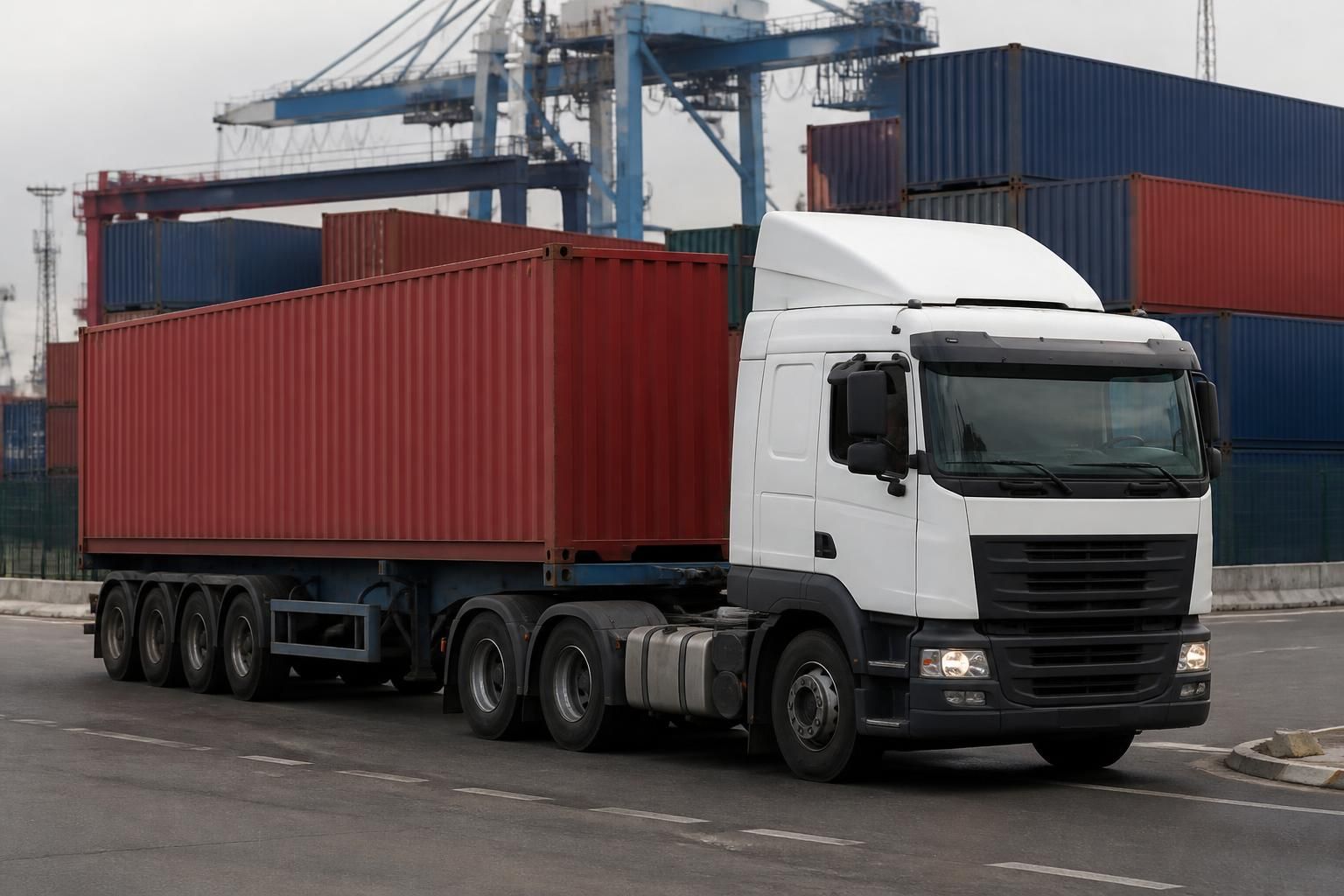
Tractor units and skeletals running between UK ports, rail terminals and inland depots. One form links you with container specialists.
- Fixed, sliding and tipping skeletals
- Port, rail and depot runs
- Owner drivers to fleets
Quick answer
Container haulage insurance is cover for hauliers who move shipping containers by road on skeletal trailers, typically between ports, rail freight terminals and inland depots. It brings together motor cover for the tractor units, cover for the skeletals whether coupled or dropped, and protection for the cargo inside. The container itself usually belongs to a shipping line or leasing company, and damage to it is often a separate point from goods in transit (opens in a new tab) cover for its contents.
Container haulage cover at a glance
- Three things to insure on each job: the tractor unit, the skeletal trailer and the sealed box with its cargo.
- The container is usually owned by a shipping line or leasing firm, and the terms a haulier accepts often make them responsible for damage while the box is in their care.
- Drivers rarely see what is packed inside a sealed box, and some cargo policies set conditions about seals for that reason.
- Skeletals spend long spells uncoupled at ports, rail yards and depots, so cover when dropped is worth confirming.
- Charges for holding a box too long are a trading cost, and standard policies generally leave them out.
What container haulage insurance covers
A container haulier's insurance is usually built from several parts. Which parts a policy includes, and which sit elsewhere, varies between insurers.
Skeletal trailer types and what insurers look at
A skeletal is a bare chassis with twist locks at the corners, designed to carry a container and little else. The design of the trailer shapes the work it can take on and the questions an insurer raises.
| Skeletal type | Typical work | What insurers look at |
|---|---|---|
| Fixed skeletal | Forty and forty-five foot boxes on regular port and rail shuttles | Mileage, where the trailer is dropped, condition of twist locks |
| Sliding or extendable skeletal | Twenty foot boxes positioned for axle loads, or longer boxes on the same chassis | Locking of the sliding section, mixed box sizes, trailer value |
| Tipping skeletal | Bulk loads such as grain, aggregates or plastics tipped out of the box door | Stability when raised, ground at the tipping point, damage to the box |
| Gooseneck skeletal | High cube boxes carried at a lower overall height | Routes with low bridges, deck height, trailer value |
Hauliers who also run curtainsiders between depots can read our curtainside lorry insurance page.
Moving your own imports or hauling for customers
The difference between hauling boxes for customers and moving your own imports changes how the vehicles are declared.
Container hauliers
Collecting and delivering boxes for shipping lines, freight forwarders or importers in return for payment is haulage. See haulier insurance.
Importers with their own unit
A firm running its own tractor and skeletal solely for boxes of its own stock may be able to insure for carriage of own goods. See own goods cover.
Which class of use covers hauling containers for forwarders and shipping lines?
- NoSocial, domestic and pleasureHas no place on a container haulage unit.
- NoCarriage of own goodsOnly boxes holding the firm's own stock, with no work for others.
- YesHaulage, or hire and rewardMoving containers for paying customers between ports, terminals and depots.
Details brokers often request
Hauling containers for others needs a standard operator licence. Brokers may also want to know which ports and rail terminals you serve, how many boxes you move in a typical week, where skeletals are left overnight and what terms you accept from shipping lines, so it helps to have these to hand when you start a container haulage quote (opens in a new tab).
What affects the price of container haulage insurance
Container haulage is priced on the places the trailers go and the time they spend waiting, not only on the miles covered.
At the terminal
Queueing in port lanes, tight stacking yards, straddle carriers and cranes working close by, and boxes lifted on and off by others.
Out on the road
A loaded box with an unknown true weight, a high centre of gravity on roundabouts, and night running to meet booked slots.
- Where the trailers are droppedSecure terminals, open lay-bys and unfenced yards each carry a different theft risk.
- Cargo valuesHigh-value consumer goods in sealed boxes attract more attention from thieves than bulk materials.
- Twist lock checksA routine of checking every lock is engaged before moving off is a point brokers may ask about.
- DriversYears holding a category C+E licence and time spent on port and rail work count in your favour.
- Claims historyPast claims for units, trailers, boxes and cargo are all weighed together.
- Size of the operationA run of units and skeletals may sit better on HGV fleet insurance.
Cover that often sits alongside container haulage insurance
The motor policy for the units is only one part of a container operation. These covers deal with the trailers, the cargo and the people.
Before you buy
Questions worth asking about container haulage cover
Container policies tend to differ on the box, the waiting time and the trailer left behind. The questions below are worth raising with the broker before anything is signed.
- Is damage to the container itself covered?Or only the goods inside, leaving the shipping line's box to your own pocket?
- Does cargo cover apply to sealed boxes?Some policies set conditions where the haulier never sees the goods being packed.
- What happens if the declared weight is wrong?An overweight box can affect a claim, so it is worth knowing how the insurer treats a weight the shipper got wrong.
- Are skeletals covered while uncoupled?Trailers left at ports, rail yards or customers' sites may have parking conditions.
- Are there overnight parking rules for loaded boxes?Many cargo policies limit cover for loads left unattended outside secure sites.
- Is delay or demurrage included?Charges from holding a box too long are usually excluded, though some policies may pick up charges that follow an insured loss.
- Does the policy cover tipping?Raising a tipping skeletal brings its own risks of overturning and damage to the box.
- Do the policy limits match the contracts you sign?Shipping line and forwarder terms can make you liable for more than a basic policy pays.
How it works
How to get a container haulage insurance quote
HGV Insure is an information site, not an insurer or a broker. We link you to MyMoneyComparison.com, a comparison service that can put container hauliers in touch with specialist brokers.
- 1
Start your quote
Get my container haulage quote takes you to MyMoneyComparison.com, our comparison service.
- 2
Describe the units and trailers
The form covers the tractor units, your operator licence and the drivers. The broker then asks about the skeletals, the terminals you serve and the cargo you carry.
- 3
Compare and decide
A specialist broker contacts you with options, subject to insurers' acceptance criteria. There is no obligation to buy.
FAQs
Container haulage insurance FAQs
What is container haulage insurance?
It is the cover a haulier needs to move shipping containers by road. It usually combines motor insurance for the tractor units, cover for the skeletal trailers, cargo cover for the goods inside and, where needed, cover for damage to the container itself.
Who is responsible if a shipping line's container is damaged?
The box normally belongs to the shipping line or a leasing company, but the terms a haulier accepts to collect it often make the haulier responsible for damage while it is in their care. Whether your policy pays for that depends on how the container is included, so it is a point for the broker.
Does goods in transit cover the container as well as the cargo?
Not necessarily. Goods in transit insurance (opens in a new tab) is aimed at the goods being carried, and some policies treat the box as packaging or equipment rather than cargo. Some insurers include containers in your care, while others need them added separately.
What if a container is heavier than the paperwork says?
Shippers are expected to declare an accurate weight, yet boxes can still arrive heavier than stated. A haulier usually has no way to check the load inside a sealed box, and some insurers take this into account, but running knowingly overweight can put cover at risk.
Are delays and demurrage covered?
Usually not. Charges from shipping lines or terminals for holding a box beyond its free time, and losses from late delivery, are usually excluded as business costs, though some policies may pick up charges that follow an insured loss.
Is my skeletal covered when it is dropped at a port or rail terminal?
Many trailer policies cover skeletals while uncoupled, sometimes with conditions about where they are left. See HGV trailer insurance for the questions insurers tend to ask.
Do I need different cover for a tipping skeletal?
The trailer can usually sit on the same policy, but insurers will want to know it tips. The risk of the trailer going over while raised, and of damaging the box during discharge, is viewed differently from a standard skeletal.
Can an owner driver get container haulage insurance?
Yes, many single-unit operators pull skeletals, often subcontracting to larger container firms. Brokers will ask about the work and who supplies the trailer. See owner driver HGV insurance.
Is skeletal trailer insurance different from container haulage insurance?
Skeletal trailer insurance usually means cover for the trailer alone, against damage, fire and theft. Container haulage insurance is a wider term for the whole operation, taking in the tractor units, the skeletals, the cargo and often the boxes themselves. See HGV trailer insurance for trailer-only cover.
What do insurers ask about port and terminal work?
Questions often cover which ports and rail terminals you serve, whether drivers hold the passes or inductions those sites require, and how you handle booked collection slots. Insurers may also ask how long units and loaded boxes wait at terminals, and where they are parked while queueing.
Does HGV Insure sell container haulage insurance?
No. HGV Insure is an information site and a trading style of Mymoneycomparison.com Ltd, the company behind MyMoneyComparison.com, which matches operators with specialist brokers. When you start a quote you continue to MyMoneyComparison.com, where quote requests are subject to insurers' acceptance criteria.
Ready to get your container work covered?
One form, specialist HGV brokers, no obligation.
Get my container haulage quote (opens in a new tab)