
Low loader cover
Low loader insurance for plant lorries and the machines on the deck
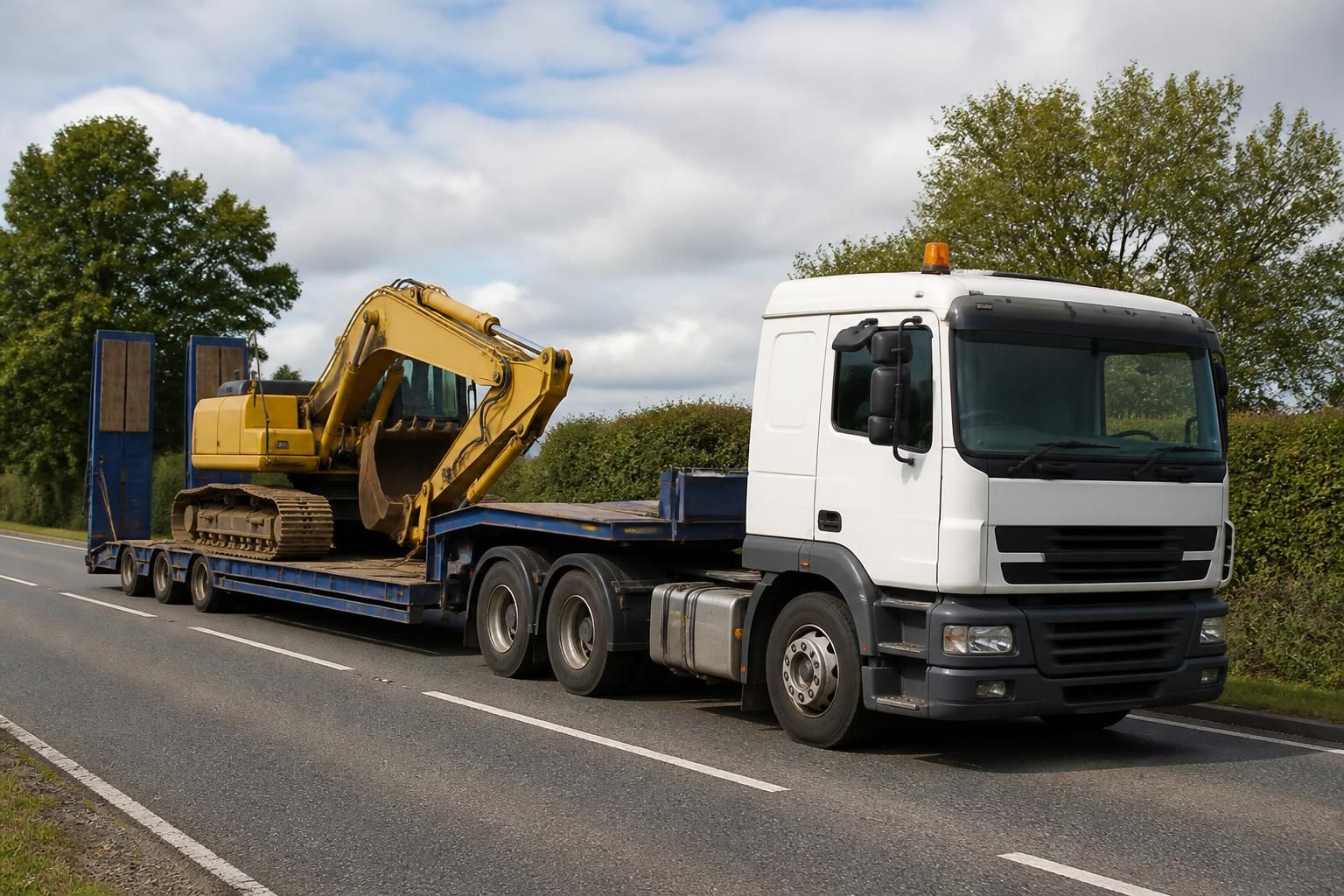
Step-frame trailers and beavertail lorries carrying diggers, machinery and cabins. One short form reaches specialist plant haulage brokers.
- Low loaders and beavertails
- Own plant or customers' plant
- Heavy and wide loads
Quick answer
Low loader insurance is cover for a lorry or trailer with a dropped deck, built to move plant, machinery and other tall or heavy items, including step-frame trailers and beavertail plant lorries. The motor policy usually protects the tractor unit or rigid, and often the trailer. Damage to the machine being carried is a different matter: it usually needs goods in transit (opens in a new tab) or plant-in-transit cover, and which one fits depends on whether the plant is yours or a customer's.
Low loader cover at a glance
- The lorry, the trailer and the plant on board are normally insured as three separate things.
- A plant hire firm moving its own diggers is treated differently from a haulier moving other people's machines.
- Driving plant up ramps, or winching it on, is the moment many policies look at closely.
- Abnormal loads bring extra planning, notice to the authorities and sometimes escorts.
- Machines can be worth far more than the vehicle carrying them, so transit limits matter.
What low loader insurance covers
A low loader policy is built around the vehicle, but the value usually sits on the deck. Knowing which policy answers for the load is the starting point.
Low loader types and what insurers look at
Deck height, axle count and the size of machine carried shape how an insurer reads a low loader risk.
| Vehicle | Typical loads | What insurers look at |
|---|---|---|
| Beavertail rigid plant lorry | Mini diggers, dumpers, rollers and access platforms | Ramp and winch set-up, load restraint, local or national work |
| Step-frame or semi-low trailer | Mid-size excavators, telehandlers, cabins and machinery | Trailer value, deck height, how loads are secured |
| Fixed-neck or detachable-neck low loader | Large excavators, dozers and heavy industrial plant | Machine value, abnormal load experience, route planning |
| Extendable or multi-axle low loader | Long, wide or very heavy loads needing special movement | Escort arrangements, driver experience, transit limit |
Flat-deck work without a dropped section is covered on flatbed lorry insurance, and lorries fitted with a loader crane on lorry crane insurance.
Moving your own plant or hauling for others
The owner of the machine on the deck decides how the vehicle is declared and which policy pays if the load is damaged.
Plant hire firms moving their own machines
A hire company delivering its own diggers to site normally declares carriage of own goods. Damage to the plant in transit is often picked up by its plant policy, so the transit extension on that policy is worth reading. More on own goods cover.
Plant haulage for customers
Moving contractors' or hire firms' machines for payment needs haulage use, plus goods in transit or plant-in-transit cover with a limit high enough for the heaviest machine. See haulier insurance.
Which class of use covers moving a customer's excavator for a fee?
- NoSocial, domestic and pleasureNot suited to plant movements.
- NoCarriage of own goodsMachines belonging to your own business only.
- YesHaulage, or hire and rewardOther people's plant carried for payment.
Heavy and abnormal loads
In the UK, a vehicle and load beyond set limits for width, length or weight generally has to be notified in advance to the police, the highway and bridge authorities on the route, or all of them, depending on its size and weight. Wider loads may need an escort vehicle, and the largest, longest or heaviest moves can need special permission. Insurers commonly ask how often you run abnormal loads and how routes are planned, so it helps to have that to hand when you start a low loader quote (opens in a new tab).
What affects the price of low loader insurance
Premiums reflect the outfit on the road and the plant on the trailer, and the second can outweigh the first.
Getting plant on and off
Wet ramps, soft ground at the site entrance, steep approaches and machines driven by someone other than the haulier's own driver.
On the road
High and wide loads near bridges and street furniture, low ground clearance on humps and level crossings, and chains or straps working loose.
- Value of plant carriedA single large excavator can exceed the value of the lorry and trailer combined, so the transit limit drives the price.
- Abnormal load workRegular wide or heavy movements are rated differently from loads that stay within normal limits.
- Driver experienceTime spent on low loaders, and on loading and securing plant, carries weight with underwriters.
- Load securing methodsRated chains, tensioners and a clear restraint routine show the risk is managed.
- Claims historyPast load damage and bridge or overhead strikes count alongside ordinary motor claims.
- Size of the operationSeveral units and trailers can be combined on HGV fleet insurance.
Cover that often sits alongside low loader insurance
Much of the money at stake on a plant move is in the load and on site, not in the vehicle, so these covers often sit next to the motor policy.
Before you buy
Points to settle about low loader cover
Plant moves throw up questions that an ordinary lorry policy may not answer. These are worth raising with the broker before cover begins.
- Is the plant covered while loading?Some transit cover only starts once the machine is secured, leaving the drive up the ramps uncovered.
- What is the limit per load?Limits are usually set against the value of the largest machine carried rather than an average one.
- Are abnormal loads included?Some policies exclude or restrict movements that need notice to the authorities or an escort.
- Who may drive plant on and off?Cover can depend on whether the driver, the customer or site staff operate the machine.
- Is a hired-in trailer covered?A trailer borrowed or rented for a job may need to be added to the policy.
- Does it cover cabins and non-plant items?Portable buildings, machinery and containers may be treated differently from diggers.
- What happens with a bridge strike?Height-related damage to structures can bring large claims, so the liability limit is a point for the broker.
- Is own-plant work declared correctly?Moving your own fleet and hauling for others are declared differently.
How it works
How to get a low loader insurance quote
HGV Insure is an information site, not an insurer or a broker. We link you to MyMoneyComparison.com, a comparison service that can put plant haulage operators in touch with specialist brokers.
- 1
The quote form
Get my low loader quote takes you to MyMoneyComparison.com, our comparison service.
- 2
Your low loader and the work
The form asks about the vehicle, its weight and body type, your operator licence and who drives. The broker then follows up on trailers, plant values and any abnormal load work.
- 3
Options from a broker
A broker who handles plant haulage gets in touch with any options available, subject to insurers' criteria, and nothing has to be bought.
FAQs
Low loader insurance FAQs
What is low loader insurance?
It insures a lorry and trailer combination, or a rigid plant lorry, with a lowered deck for carrying plant and machinery. It usually pairs HGV motor cover for the vehicle with separate cover for the machines being moved.
Is a beavertail plant lorry insured as a low loader?
Often, yes. A rigid with a sloping rear deck, ramps and a winch does the same job on a smaller scale, and brokers tend to place it with low loader and plant haulage insurers.
Does my lorry policy cover the digger on the back?
Usually not by itself. Machines carried are a separate risk, normally dealt with by goods in transit insurance (opens in a new tab), plant-in-transit cover or the plant owner's own policy. Brokers can confirm in writing which policy would answer a load damage claim.
Is the plant covered while it is driven up the ramps?
It varies. Some policies cover loading and unloading, including winching, while others only respond once the machine is secured for travel. The answer often depends on who is operating the machine at the time.
Do I need to tell my insurer about abnormal loads?
Yes, insurers generally want to know if you move loads that go beyond normal width, length or weight limits, as these usually need advance notice, route planning and sometimes escorts. Undeclared abnormal work could put a claim at risk.
How is a plant hire firm's low loader insured?
A hire firm delivering its own machines typically insures the vehicle for carriage of own goods, with the plant covered in transit under its plant policy. Moving machines for other firms changes that to haulage use, as our own goods cover page explains.
Can I insure a low loader trailer on its own?
Yes. Trailers can be insured separately from the tractor unit, which helps when they are swapped between units or hired out. Our HGV trailer insurance page has more.
What licence do I need to drive a low loader?
An articulated low loader needs a category C+E entitlement, while a beavertail rigid over 7.5 tonnes needs category C. Insurers also tend to ask how long drivers have held the entitlement and how much plant work they have done.
Can I get low loader cover as a new operator?
Some insurers consider it, though they often look closely at driver experience with plant and the value of machines to be moved. The new operator HGV insurance page covers first-time operators.
Does HGV Insure sell low loader insurance?
No. HGV Insure is an information site and a trading style of Mymoneycomparison.com Ltd, the company behind MyMoneyComparison.com, which matches operators with specialist brokers. When you start a quote you continue to MyMoneyComparison.com, where quote requests are subject to insurers' acceptance criteria.
Ready to cover your low loader?
One form, specialist plant haulage brokers, no obligation.
Get my low loader quote (opens in a new tab)