
Refuse lorry cover
Refuse lorry insurance for RCVs on trade rounds and council contracts
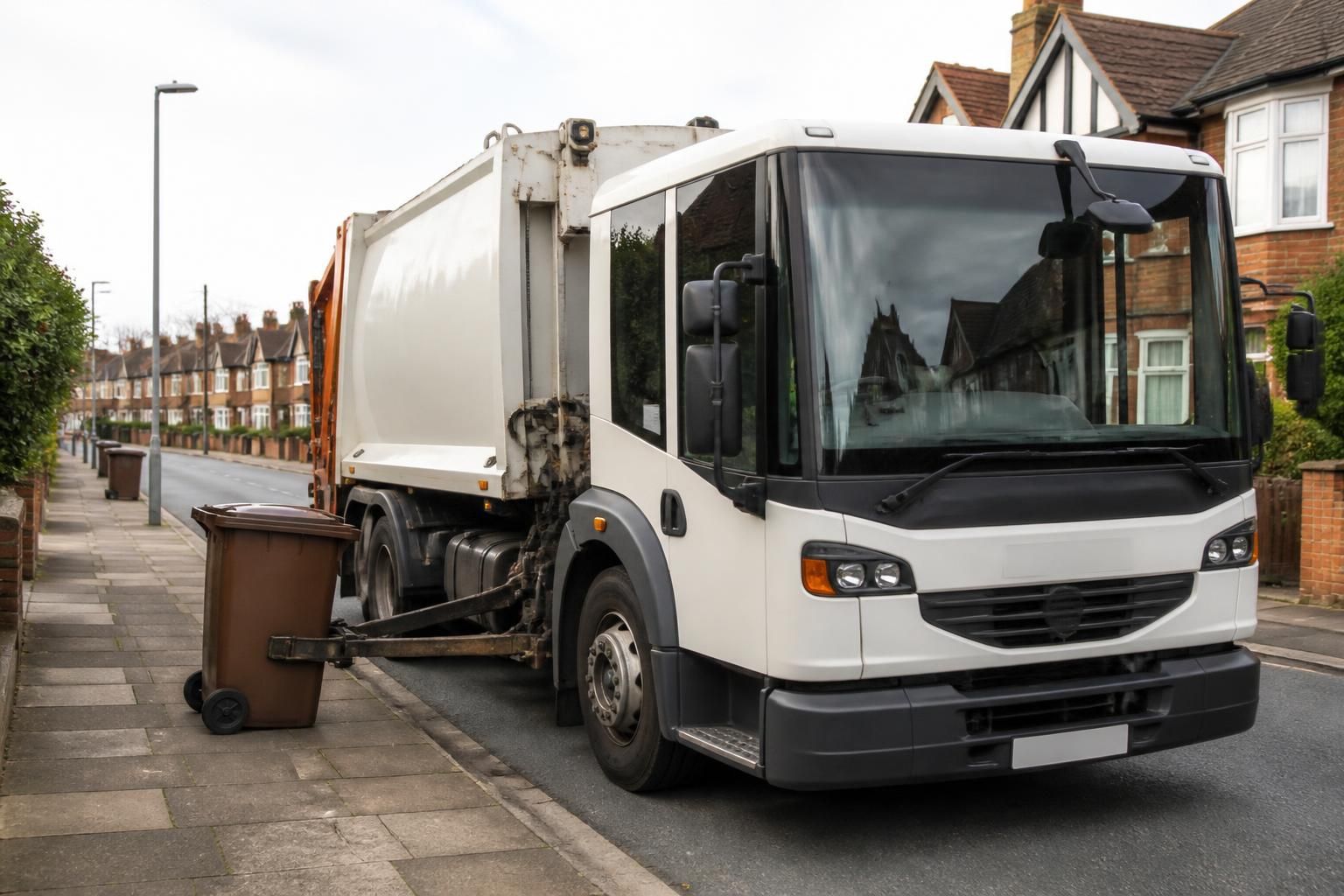
Bin lorries, compactors and recycling vehicles with crews on board. One short form puts you in touch with specialist waste fleet brokers.
- Rear, side and front loaders
- Recycling and food waste
- One RCV or a fleet
Quick answer
Refuse lorry insurance is HGV cover for refuse collection vehicles (RCVs or bin lorries), including the compaction body and bin lift. It deals with the vehicle on the road and, depending on the policy, while the lift and compactor are working at the kerbside. Crews, the public around the vehicle and the waste contract itself usually bring in employers' liability (opens in a new tab) and public liability (opens in a new tab) as well.
Refuse lorry cover at a glance
- An RCV is both a heavy goods vehicle and a piece of working machinery, and insurers look at each side.
- Crew members walking around a slow, reversing vehicle shape much of how the risk is rated.
- Fire in the body, often started by batteries or hot ash thrown in a bin, is a known hazard for these vehicles.
- The compaction body and lift make up a large share of the replacement value, which shapes the sum insured.
- Trade waste rounds for paying customers and council contract work are both normally insured for hire and reward.
What refuse lorry insurance covers
A refuse vehicle policy starts with standard HGV motor cover and then has to account for the equipment and the way a collection round works.
Refuse vehicle types and what insurers look at
Each body type collects waste in its own way, which changes where the crew stands, how the lift operates and what can go wrong.
| Refuse vehicle | Typical work | What insurers look at |
|---|---|---|
| Rear-end loader compactor | Household and trade wheelie bins emptied by a crew at the back | Crew working behind the vehicle, reversing, lift and packer condition |
| Side loader | Automated or single-operator kerbside collection from one side | Arm reach near parked cars and street furniture, driver training |
| Front loader | Large trade containers emptied over the cab at shops and industrial sites | Overhead lifting, container condition, access on private yards |
| Narrow-access, recycling or food waste RCV | Tight streets, split bodies for separate materials, small food waste units | Vehicle width and weight, mixed loads, fire risk from batteries |
Collecting skips or roll-on roll-off containers instead? Skip loaders, hook loaders and moving-floor bulk trailers are rated as separate vehicle types, each with its own page in the cover list.
Commercial waste rounds or council contract work
Refuse work comes in a few shapes. A private contractor running its own trade waste round and a firm collecting household bins under a council contract are both carrying other people's waste, but the insurer will want to know which applies and how the contract is set up.
Trade and commercial rounds
Collecting bins from shops, offices and restaurants for a fee is hire and reward work, the same class of use found on haulier insurance.
Council and contract collections
Household rounds run for a council usually come with contract terms, and some tenders set minimum liability limits that the policy needs to meet.
Which class of use covers emptying bins for paying customers or under contract?
- NoSocial, domestic and pleasurePrivate use with no collection work involved.
- NoCarriage of own goodsFits a business moving only its own site waste, for example a retailer or estate collecting waste from its own sites in its own RCV, as explained under own goods cover.
- YesHaulage, or hire and rewardCollecting and disposing of waste belonging to households, businesses or a council client.
Paperwork brokers may ask for
Collecting waste for households, businesses or a council client generally means holding waste carrier registration, and RCVs over 3.5 tonnes on that work usually run under a standard operator licence. If the work is under a council contract, the insurance clauses from the tender are useful to have to hand when you start a refuse lorry quote (opens in a new tab).
What affects the price of refuse lorry insurance
Price reflects the value of the vehicles and the pattern of the round, as well as the people who drive and load them.
Stop-start streets
Constant short stops, tight turns and reversing into cul-de-sacs mean many low-speed scrapes with parked cars, walls and bollards.
High-value bodies
A compactor body and lift can cost as much as the chassis, so even a contained fire or a lift failure can lead to a large claim.
- Vehicle valueThe agreed or market value of chassis, body and lift together, which drives the own-damage part of the premium.
- Reversing controlsCameras, sensors, banksman procedures and policies on reversing help show how the low-speed risk is managed.
- Crew arrangementsHow many loaders ride on each vehicle, how they are trained and whether they ever stand on step boards or footplates.
- Fire precautionsFire suppression, temperature checks on the load and rules for tipping a smouldering body away from buildings.
- Claims historyPrevious motor, fire and liability claims across the fleet, including minor kerbside damage.
- Fleet sizeRunning several RCVs, sweepers and support vehicles changes how insurers rate the business as a whole.
Cover that often sits alongside a refuse lorry policy
The vehicle policy is only one part of insuring a waste collection business. These covers often sit next to it.
Before you buy
Points that set refuse lorry policies apart
Two refuse vehicle policies can look similar until a claim involves the lift, the crew or a load fire. These are the points where policies tend to differ.
- Is the bin lift covered while working?Some policies exclude damage or injury caused while the lift is working, leaving the kerbside operation to liability cover.
- How are load fires treated?Fire starting in the waste rather than the vehicle itself can be handled differently.
- Is the full body value insured?An agreed value that includes the compactor and lift avoids a shortfall after a total loss.
- Are crew injuries dealt with elsewhere?Loaders hurt while working around the vehicle are usually an employers' liability matter, while crew injured as passengers in the cab fall to the motor policy.
- What do council contract terms need?Minimum limits, indemnity to the council and named insured clauses may all apply.
- Who can drive the RCVs?Age, licence category and experience on refuse vehicles vary between insurers.
- Is a replacement vehicle offered?Missed rounds can mean contract penalties, so hire of a substitute RCV can matter.
- Are vehicles parked together covered for fire?A fire spreading between RCVs parked side by side overnight is a known concern, and the depot building itself needs separate property cover.
How it works
How to get a refuse lorry insurance quote
HGV Insure is an information site, not an insurer or a broker. We link you to MyMoneyComparison.com, a comparison service that can match waste collection businesses with specialist brokers.
- 1
The quote form
Get my refuse lorry quote takes you to MyMoneyComparison.com, our comparison service.
- 2
Your refuse vehicles and the round
The form asks about your refuse vehicles, their weight and body type, your operator licence, the drivers and whether the work is trade or contract.
- 3
Options from a broker
A specialist broker contacts you with options, subject to insurers' acceptance criteria. There is no obligation to buy.
FAQs
Refuse lorry insurance FAQs
What is refuse lorry insurance?
It is HGV insurance arranged for refuse collection vehicles, taking in the chassis, the compaction body and the bin lift, along with the way a collection round operates. It is often paired with liability cover for crews and the public.
Is an RCV insured differently from an ordinary rigid lorry?
Yes, in practice. The equipment, the crew on foot and the stop-start work all change the rating, so a standard rigid lorry quote may not reflect the real risk or the true value of the body.
Does the policy cover the bin lift and compactor?
It depends on the insurer. Some include the equipment while it works at the kerbside, others restrict cover once the vehicle is parked and operating. Damage to residents' bins or property during a lift may sit under public liability instead.
What happens if the load catches fire?
Comprehensive motor cover usually responds to fire damage to the vehicle, but a fire that starts in the waste can be treated with conditions or exclusions. Brokers often ask about suppression systems and how crews deal with a hot load.
Are loaders covered when they are injured on the round?
Injury to your own crew while loading or working at the kerbside is normally an employers’ liability (opens in a new tab) claim, while crew hurt as passengers in the cab are covered under the motor policy. Employers' liability is generally compulsory for UK businesses with staff.
Do I need waste carrier registration?
Yes, if you collect waste for anyone else. Refuse contractors generally need waste carrier registration, and brokers tend to ask for it with the operator licence when a quote is set up.
Can I insure refuse lorries working on a council contract?
Yes. Insurers will want to see the contract's insurance requirements, which can include minimum limits and naming the council on the policy. A broker can check whether a quote meets those terms.
Does a refuse lorry need an operator licence?
RCVs over 3.5 tonnes collecting waste for customers usually run under a standard operator licence. Brokers normally ask for the licence number, and insurers may look at the operator's compliance record.
Can refuse lorries go on a fleet policy?
Yes. Waste firms with several RCVs, sweepers or support vans often use HGV fleet insurance to keep everything on one renewal.
Does HGV Insure sell refuse lorry insurance?
No. HGV Insure is an information site and a trading style of Mymoneycomparison.com Ltd, the company behind MyMoneyComparison.com, which matches businesses with specialist brokers. When you start a quote you continue to MyMoneyComparison.com, where quote requests are subject to insurers' acceptance criteria.
Ready to get your refuse vehicles covered?
One form, specialist HGV brokers, no obligation.
Get my refuse lorry quote (opens in a new tab)