
Race transporter cover
Race transporter insurance for motorsport lorries
Rigids and artics that take race cars, spares and a crew to the circuit. A single short form links you with brokers who know motorsport lorries.
- Rigid and artic transporters
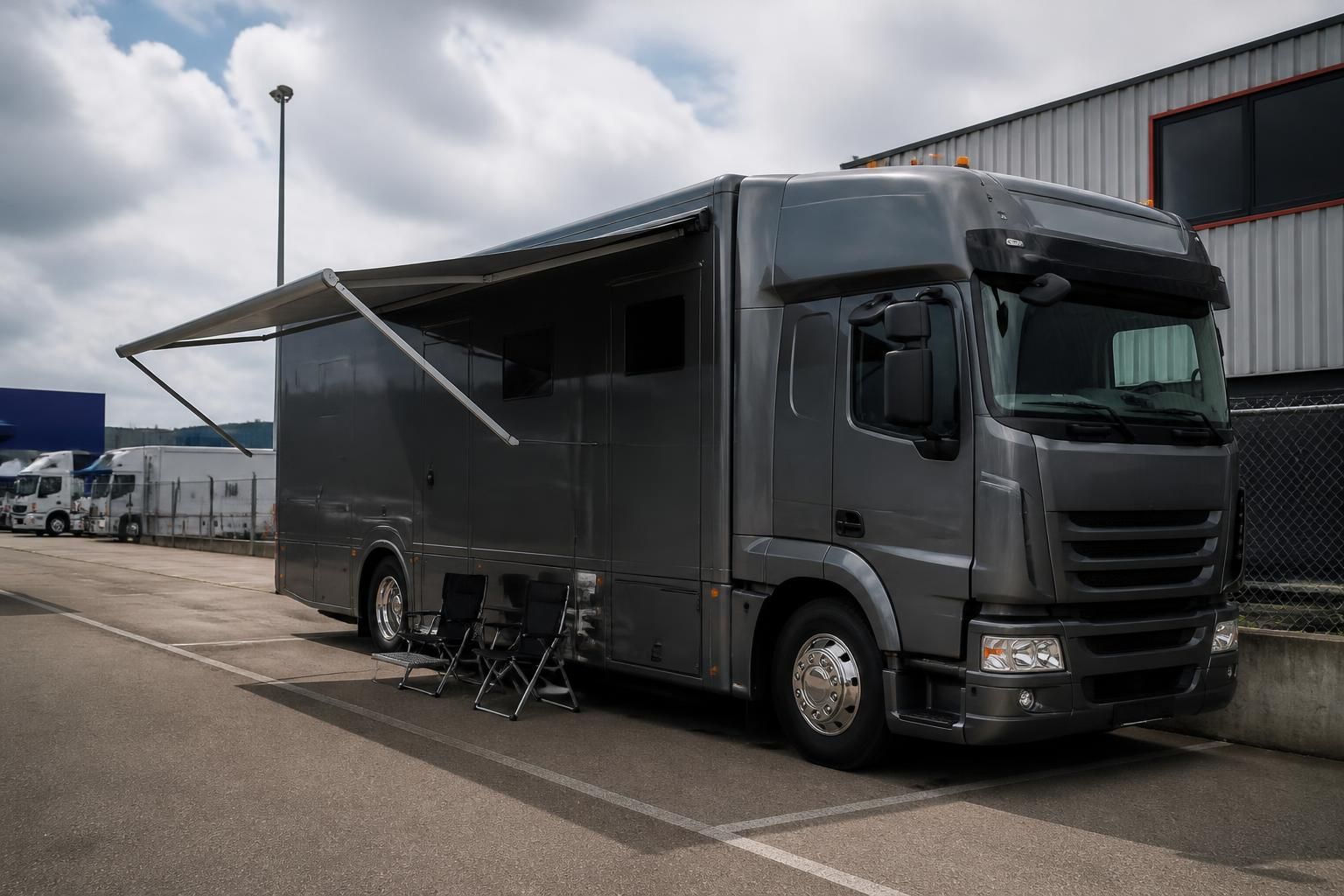
- Living quarters and awnings
- Privateers and teams
Quick answer
Race transporter insurance is motor cover for a lorry built or converted to carry race cars to and from circuits, usually with a workshop, storage and sometimes living quarters on board. It is also searched for as motorsport transporter insurance, race truck insurance or race van insurance. The policy deals with the lorry on the road and parked at events. The race cars inside, the tools and the crew's belongings are often insured separately or subject to limits, and the class of use depends on whether you race for yourself, run a team or carry cars for others.
Race transporter cover at a glance
- Carrying your own race car for amateur competition is rated differently from team or paid work.
- The race cars on board usually need their own cover, as the lorry policy rarely extends to them.
- Living quarters, awnings and onboard equipment can add considerably to the vehicle's value.
- Seasonal use and low annual mileage are common, and some insurers reflect that in the cover offered.
- Long stays in circuit paddocks bring theft, fire and wind damage risks that brokers will ask about.
What race transporter insurance covers
A race transporter policy starts with the lorry as a road vehicle, then reaches out to the build, the contents and the time spent parked at events. How far it reaches varies between insurers.
Race transporter types and what insurers look at
Size, layout and how much of the lorry has been converted all shape the way an insurer views a transporter.
| Race transporter | Typical use | What insurers look at |
|---|---|---|
| Small rigid with a single car bay and a living area | Privateers at club meetings and sprints | Value of the conversion, gas and electrics in the living space |
| Larger rigid with a tail lift or ramp and space for more than one car | Small teams and racing families | Loading method, how cars are secured, driver licence and experience |
| Artic with a race trailer, upper car deck and workshop | Teams running several cars across a season | Trailer value, awning set-up, who drives and how far the lorry travels |
| Converted ex-fleet lorry or former horsebox | Owners who have fitted their own car bay | Quality of the conversion, whether the build is documented, age of the chassis |
Lorries that move cars for the motor trade are covered on our car transporter insurance page, and lorries with stalls and living areas for horses on horsebox lorry insurance.
Racing for yourself, a team, or carrying for others
The class of use depends on why the race car is in the back. A hobby racer heading to a club meeting and a firm moving customers' cars between circuits for a fee are different risks, even in identical lorries.
Private and team use
Amateur racers carrying their own car often insure on a private or social basis, while a team running cars as a business usually declares business use. Whether an operator licence applies can depend on this too, so it is a point for the broker. Arrive-and-drive programmes, where customers pay to race the team's own cars, are usually business use. Businesses carrying their own equipment may also look at own goods HGV insurance.
Carrying cars for others
Taking other competitors' cars to events for payment moves the lorry towards hire and reward use, closer to haulier insurance.
Which class of use fits a transporter that carries other people's race cars for a fee?
- NoSocial, domestic and pleasureFits a private racer moving only their own car, not paid carriage.
- NoBusiness use or own goodsA team moving its own cars and kit, with no charge to others.
- YesHaulage, or hire and rewardCustomers' cars carried to circuits or storage in return for payment.
Details brokers often request
Brokers commonly ask for the chassis and conversion details, photos or invoices for the build, how many events a season the lorry attends, typical annual mileage and where it is kept between meetings. Having these to hand helps when you begin a race transporter quote (opens in a new tab).
What affects the price of race transporter insurance
A race transporter may cover modest distances in a year, yet carry high-value equipment and spend long periods parked among other teams.
At the circuit
Overnight stays in paddocks, awnings out in changeable weather, generators running and cars being unloaded among crowds.
Between events
Where the lorry is stored over the winter, how it is secured, and how often it is driven outside the racing season.
- Vehicle and conversion valueA high-spec build with living space and a workshop costs more to repair or replace than the bare chassis.
- Annual mileageLower mileage and a short season can count in your favour with some insurers.
- Class of usePrivate, team and paid carriage are each priced on their own terms.
- DriversAge, licence and experience of each driver, including friends or crew who share the driving.
- SecurityAlarms, trackers, locked storage and secure winter parking help reduce theft risk.
- Claims historyPrevious motor and theft claims, and the size of the operation if several lorries sit on HGV fleet insurance.
Cover that often sits alongside race transporter insurance
The lorry policy is one piece. Racing weekends bring people, equipment and other owners' property into the picture.
Before you buy
Questions worth asking about race transporter cover
Transporter policies can look alike until something goes wrong in a paddock or a car is damaged on the ramp. Each of the points below is worth clearing up with the broker before cover begins.
- Is the conversion insured at its full value?Car decks, living quarters and workshops may need listing so they are not left out of a claim.
- Are the race cars covered while on board?And if not, which policy picks them up during loading, travel and unloading?
- What limit applies to tools and personal effects?Spares, laptops, race suits and crew belongings can add up quickly.
- Are there conditions for unattended vehicles?Some policies only cover theft from a locked, alarmed lorry or one parked in a secure compound.
- Is the awning covered?Wind damage to an awning, or to cars and people beside it, may sit under different sections.
- Can friends or crew drive?Named drivers, any-driver options and minimum ages vary from one insurer to the next.
- Is laid-up cover available off season?Some insurers reduce cover while the lorry is stored over the winter and not driven.
- Does the class of use match what you do?Racing yourself, running a team and carrying for others are all declared differently.
How it works
How to get a race transporter insurance quote
HGV Insure is an information site, not an insurer or a broker. We link you to MyMoneyComparison.com, a comparison service that can match race transporter owners with specialist brokers.
- 1
The quote form
Get my race transporter quote takes you to our partner, MyMoneyComparison.com.
- 2
Your race transporter and the work
The form asks about the lorry, its weight and body type, who drives and how it is used. The broker then picks up the conversion, the contents and the race calendar.
- 3
Options from a broker
A specialist broker contacts you with options, subject to insurers' acceptance criteria. There is no obligation to buy.
FAQs
Race transporter insurance FAQs
What is race transporter insurance?
It is motor insurance for a lorry used to carry race cars, spares and equipment to motorsport events. It can extend to the body conversion, living quarters and some contents, depending on the insurer.
Are the race cars covered while they are in the transporter?
Usually not by the lorry policy itself. Owners often arrange separate cover for the cars, and where a transporter carries other people's cars for payment, goods in transit cover is the more usual route. Damage on track is a different risk again.
Can I insure a transporter with living quarters?
Yes, many insurers will. They tend to ask about the layout, gas and electrical installations and how the living space was fitted, and some treat that part much like a motorhome.
Does a race transporter need an operator licence?
Generally, one is needed for a lorry over 3.5 tonnes used in connection with a business or to carry goods for payment, and not usually for purely private amateur racing. Team and sponsored set-ups can fall either side, so the broker will want to understand how the lorry is run before quoting.
Who can drive a race transporter?
Anyone driving a transporter over 3.5 tonnes needs the lorry licence category that matches its weight, and many insurers also set minimum ages and experience levels. Policies may name each driver or allow wider driving, which matters when crew members or family share the trip to a circuit.
Is cover different if I only use the lorry a few weekends a year?
Some insurers offer limited mileage cover, or reduced laid-up cover while the lorry is stored over the winter. Whether this is available depends on the insurer and how the vehicle is kept.
Are my tools and belongings covered at the circuit?
Often only up to a limit, and sometimes only while the lorry is locked or someone is with it. Theft from an open awning or an unattended paddock pitch is a common gap worth checking.
What if I carry a friend's race car as well as my own?
Carrying another competitor's car occasionally and for free may still be acceptable under some policies, but charging for it is usually hire and reward. Brokers can say how insurers treat this, and our car transporter insurance page covers paid car carriage.
Can a converted horsebox be insured as a race transporter?
Often, yes. The conversion needs declaring, insurers may ask how it was done and who did it, and the vehicle's registered body type may need updating to match. Our horsebox lorry insurance page covers lorries still carrying horses.
Does HGV Insure sell race transporter insurance?
No. HGV Insure is an information site and an affiliate of MyMoneyComparison.com, which matches operators with specialist brokers. When you start a quote you continue to MyMoneyComparison.com, and we may be paid a small commission if you are matched with and speak to a broker.
Ready to sort cover for your race transporter?
One form, specialist HGV brokers, no obligation.
Get my race transporter quote (opens in a new tab)