
Road sweeper cover
Road sweeper insurance for truck-mounted sweepers
Suction sweepers on HGV chassis, working roadworks, sites and kerbs. One short form reaches specialist brokers.
- Lorry-mounted sweepers
- Operated or self-drive hire
- One sweeper or a fleet
Quick answer
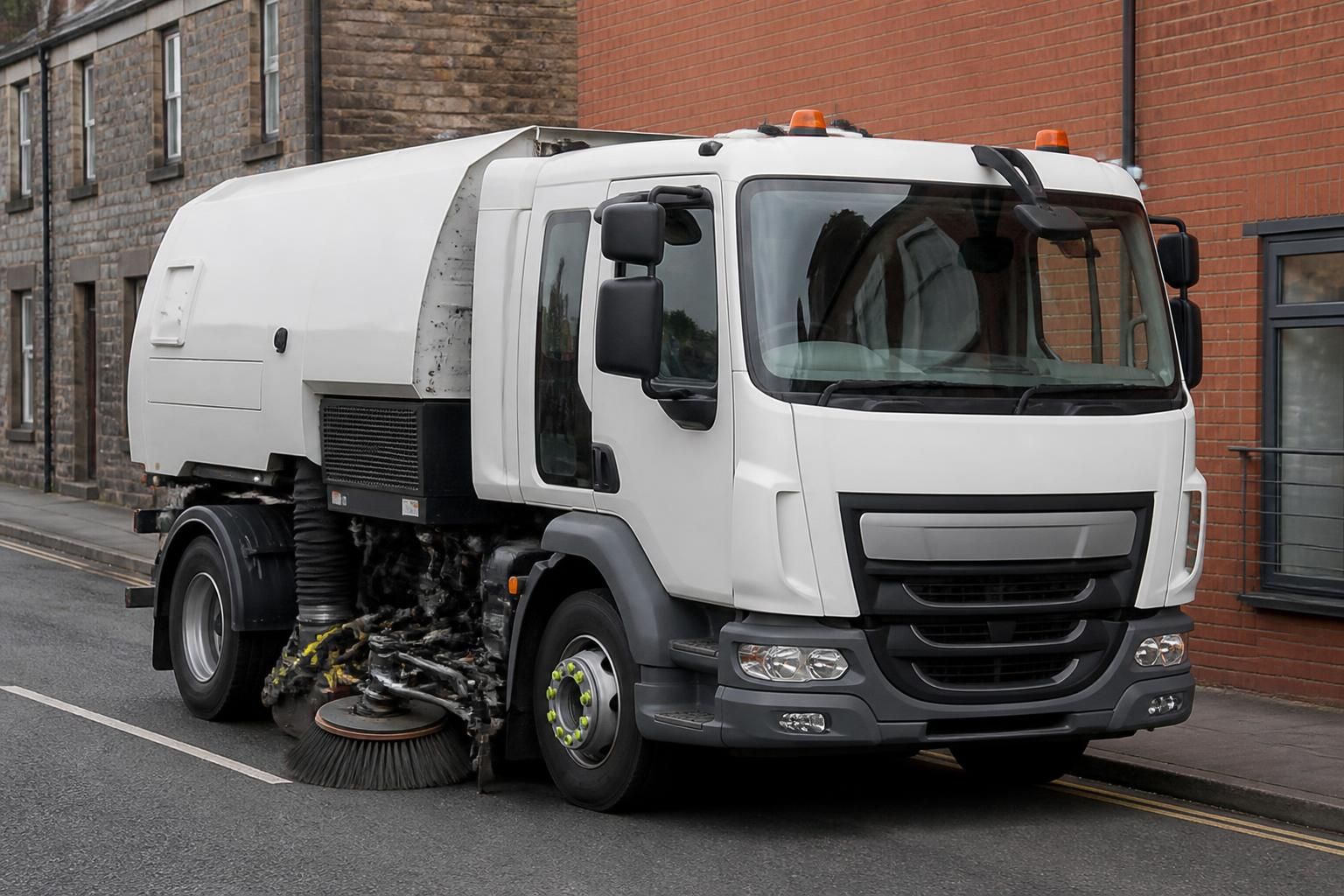
Road sweeper insurance, sometimes called street sweeper insurance, is cover for a lorry-mounted suction sweeper: an HGV chassis carrying brushes, a suction nozzle and a hopper that collects grit, mud and debris from roads and sites. The motor cover needs to reflect slow working speeds in live traffic and long hours at the kerb, not just driving between jobs. Damage from thrown stones or brushes, and harm to people on the footway, may fall under the motor policy or under public liability (opens in a new tab), so how the two fit together is worth settling at the start.
Road sweeper cover at a glance
- A sweeper spends much of its working time moving slowly in the nearside lane, which shapes how insurers rate it.
- Hiring the sweeper out with your own driver is a different risk from letting a customer drive it themselves.
- Stones flicked by the brushes and scrapes against bollards or parked cars are typical of the claims insurers ask about.
- Tipping sweepings for customers raises waste carrier and pollution questions alongside the motor cover.
- Small self-propelled compact sweepers are usually insured differently from those built on a lorry chassis.
What road sweeper insurance covers
A sweeper policy starts with motor cover for the chassis and the sweeping body, then needs to stretch to the work done at kerb speed. The gaps tend to appear between those two parts.
Road sweeper types and what insurers look at
Chassis size, hopper capacity and any extra kit fitted all change the value at stake and the work the sweeper is sent to.
| Sweeper | Typical work | What insurers look at |
|---|---|---|
| Sweeper on a 7.5 tonne chassis | Town centres, car parks, housing estates and tight site access | Driver licence category, narrow streets, parked cars close by |
| Two-axle sweeper on a mid-weight rigid | Highway contracts, planing and surfacing gangs, site entrances | Night and lane-closure work, hopper capacity, distances between sites |
| Three-axle high-capacity sweeper | Large earthworks, motorway schemes and heavy mud on haul roads | Vehicle value, weight when full, where the sweepings are tipped |
| Sweeper with a jetting or gully kit | Gully cleaning, high-pressure washing and drain clearance alongside sweeping | Extra equipment value, water and silt handling, work near drains |
A sweeper that works alongside surfacing crews often shares the job with a tar sprayer, while council collection vehicles are explained on our refuse lorry insurance page.
Operated hire, self-drive hire or your own sites
Who drives the sweeper and whose work it does changes how it is insured. A groundworker keeping a sweeper for its own sites carries a different risk from a hire firm supplying sweepers to contractors across a region.
Operated hire
The sweeper goes out with your own trained driver, usually on day or shift rates, to highway contractors, utilities firms and building sites. Your business stays in control of the vehicle and how it is worked.
Self-drive hire
The customer collects the sweeper and puts their own driver in the cab. Some insurers decline this outright, and those that accept it often ask how hirers and their drivers are vetted.
Which use fits a sweeper sent out with your own driver to contractors?
- NoSocial, domestic and pleasureNot suited to a working sweeper.
- NoOwn sites onlyBusiness use, but limited to keeping your own projects clean, with no outside customers.
- NoSelf-drive hireLetting the sweeper out for hirers to drive is a separate risk that many policies exclude.
- YesBusiness use for an operated hire firmSweeper and driver supplied to contractors and sites, for payment.
Details a broker may want to see
Firms tipping sweepings collected for customers generally need waste carrier registration, and brokers may ask where the waste goes. Whether a sweeper needs an operator licence depends on who runs it and how it is used, so licence details may be requested either way. Having these, plus driver training records, ready makes it quicker to start a road sweeper quote (opens in a new tab).
What affects the price of road sweeper insurance
A sweeper is rated on the conditions it works in as much as on the miles it covers between jobs.
While sweeping
Live lanes, night shifts, traffic management, footway users and parked cars along the kerb all raise or lower the exposure.
Between jobs
Road speed when travelling, the weight of a full hopper, and how far apart the contracts are spread.
- Vehicle and body valueA new high-capacity sweeper costs far more to replace than an older two-axle unit, and the body is part of that sum.
- Type of contractMotorway and trunk road schemes are viewed differently from car parks, retail sites or estate roads.
- Hire arrangementOperated hire is usually more straightforward to place than self-drive hire to outside firms.
- Drivers and trainingExperience on sweepers, licence categories and any second steering position used on the kerb side all come up.
- Claims historyRear-end impacts, kerb damage and thrown-stone claims are looked at closely.
- Number of sweepersSeveral sweepers, or sweepers run alongside tippers and plant lorries, can sit together on HGV fleet insurance.
Cover that often sits alongside road sweeper insurance
Plenty of what can go wrong with a sweeper happens to people and property beside it rather than on the open road. These covers fill in around the motor policy.
Before you buy
Questions worth asking about road sweeper cover
Sweeper policies tend to differ on what happens while the brushes are down. These points are worth clearing up with the broker before cover starts.
- Is the sweeping work itself covered?Or only driving between sites, with work at kerb speed treated as a separate risk?
- Who pays for damage from thrown stones?Chipped paint, cracked glass and dented panels on parked cars can land on either the motor or the liability policy.
- Is street furniture damage included?Bollards, signs, kerbs and barriers struck by the nozzle or brushes are a regular source of claims.
- Is self-drive hire allowed?Many policies restrict who may drive the sweeper, and some exclude hiring it out without a driver.
- Is the sweeping body insured for its full value?The brushes, fan and hopper can be worth a large part of the whole vehicle.
- What happens if sweepings escape?Spills of wet silt on the road or into drains may be covered only when sudden and accidental.
- Are night shifts and motorway work declared?Contracts in live lanes or under traffic management may need to be named.
- Is a replacement sweeper offered?A like-for-like sweeper can be hard to find quickly when a contract is waiting.
How it works
How to get a road sweeper insurance quote
HGV Insure is an information site, not an insurer or a broker. We link you to MyMoneyComparison.com, a comparison service that can put sweeper owners and hire firms in touch with specialist brokers.
- 1
The quote form
Get my road sweeper quote takes you to our partner, MyMoneyComparison.com.
- 2
Your road sweeper and the work
The form asks about the vehicle, its weight and body type, your licences and who drives. The broker follows up on the hire terms and the contracts you take on.
- 3
Options from a broker
A specialist broker gets in touch with options, subject to insurers' acceptance criteria. There is no obligation to buy.
FAQs
Road sweeper insurance FAQs
What is road sweeper insurance?
It is cover for a truck-mounted sweeper, usually built on a rigid HGV chassis. It combines HGV motor insurance with cover suited to slow work at the kerb, and is often arranged alongside liability cover for the business.
Are compact sweepers insured the same way?
Usually not. Small self-propelled sweepers that are not built on a lorry chassis are often insured as specialist vehicles or as plant, so they may sit on a different policy from truck-mounted sweepers.
Who pays if the brushes throw a stone at a parked car?
It depends on how the policies are set up. Some motor policies handle damage caused while the vehicle is working, while others leave it to public liability (opens in a new tab). The excess on small claims like these is worth knowing in advance.
Can I hire my sweeper out without a driver?
Some insurers will cover self-drive hire, often with checks on the hirer, their drivers and the contract terms. Others only accept operated hire, where your own driver stays with the vehicle.
Does the policy cover being hit from behind while sweeping?
Damage to your sweeper is usually covered on a comprehensive policy, and the other driver's insurer may be pursued for the cost. Rear lights, beacons and markings are often asked about, as is any traffic management on the job.
Do I need a waste carrier registration to tip sweepings?
Carrying waste collected for other people generally needs registration, and sweepings are normally treated as waste. Brokers may ask for the registration and for where the sweepings are taken.
Does a road sweeper need an operator licence?
It depends on who runs the sweeper and what it is used for, as some street cleaning work is exempt and some is not. Insurers commonly ask for licence details where one is held.
Can I insure sweepers with my tippers and other lorries?
Yes, many insurers will place sweepers on a mixed fleet policy alongside tippers and plant vehicles. See HGV fleet insurance and tipper lorry insurance.
Does night work or traffic management affect sweeper truck insurance?
It can. Insurers often ask whether the sweeper works in live lanes, under lane closures or overnight, and what lighting and markings it carries. Declaring this work up front helps avoid gaps if a claim arises during a night shift.
Does HGV Insure sell road sweeper insurance?
No. HGV Insure is an information site and an affiliate of MyMoneyComparison.com, which matches operators with specialist brokers. When you start a quote you continue to MyMoneyComparison.com, and we may be paid a small commission if you are matched with and speak to a broker.
Ready to get your road sweeper covered?
One form, specialist HGV brokers, no obligation.
Get my road sweeper quote (opens in a new tab)