
Flatbed cover
Flatbed lorry insurance for open-deck loads
Rigid flatbeds and flat trailers moving steel, timber, machinery and materials. A single short form leads to specialist flatbed brokers.
- Rigid flatbeds and flat trailers
- Own goods or haulage
- Long and heavy loads
Quick answer
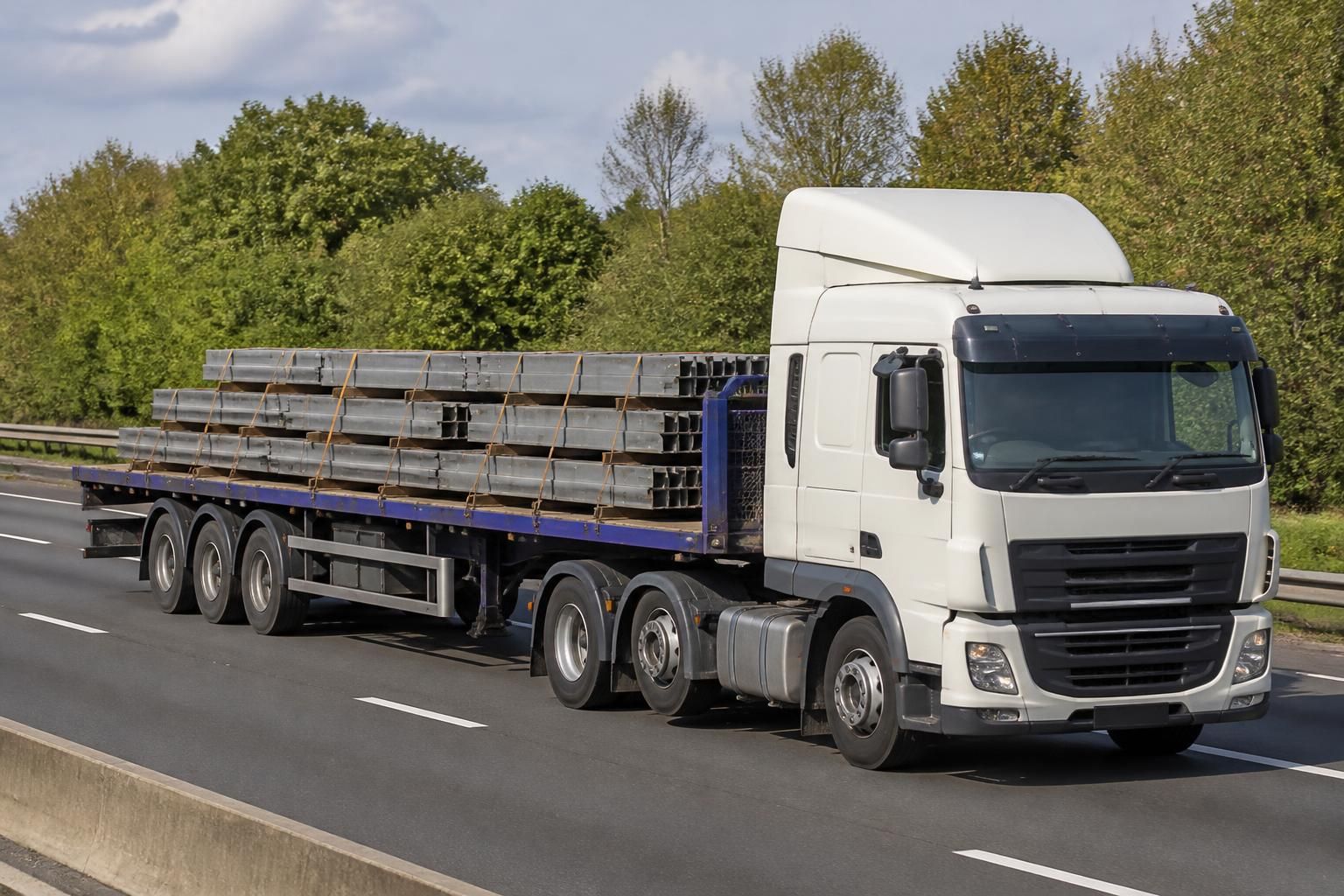
Flatbed lorry insurance is HGV motor cover for a lorry with an open, flat load deck and no fixed sides or roof, often arranged alongside cover for flat trailers, used to carry goods such as steel, timber, machinery and building materials. It is also searched for as flatbed truck insurance. Because the load sits in the open, insurers pay close attention to how it is secured, what it is worth and whether it belongs to you or a customer. Goods carried for others are usually insured separately under goods in transit (opens in a new tab) cover.
Flatbed cover at a glance
- The motor policy covers the lorry or tractor unit; the load on the deck is a separate question.
- Load restraint matters to insurers, since a shifting or falling load can cause serious third-party claims.
- Open decks leave goods exposed to rain, road spray and theft, which many goods policies restrict.
- Long, wide or overhanging loads can change the risk and may come with conditions.
- Carrying your own materials is declared differently from hauling steel or timber for customers.
What flatbed lorry insurance covers
A flatbed policy starts with the vehicle on the road and can be built out to cover the deck, the trailer and the goods. Which parts are included varies a good deal between insurers.
Flatbed types and what insurers look at
From a small rigid with a headboard to a trailer that stretches for long girders, each flatbed set-up brings its own load and handling questions.
| Flatbed | Typical loads | What insurers look at |
|---|---|---|
| Rigid flatbed | Pallets of blocks, timber packs, scaffolding and merchant deliveries | Restraint points, load weight, site access and urban driving |
| Flatbed with a loader crane | Bricks, steel and machinery placed straight onto site | Lifting work alongside the driving, operator training |
| Flat semi-trailer | Steel coils, structural steel, timber and boxed machinery | Coil and chain restraint, tractor unit cover, overnight parking |
| Extendable flat trailer | Long beams, pipes, poles and pre-cast sections | Overhang, marking of long loads, routes and manoeuvring |
Crane-fitted flatbeds have their own page on lorry crane insurance. Plant too tall or heavy for a standard deck is usually moved on a low loader, which has its own page on low loader insurance.
Carrying your own materials or hauling for customers
Whose load is on the deck shapes the whole policy. A steel stockholder delivering its own stock is rated on different terms from a haulier moving other firms' girders and timber.
Your own stock and materials
Merchants, fabricators, timber yards and contractors moving their own goods usually insure the flatbed for carriage of own goods. More on own goods HGV insurance.
Loads carried for payment
Moving customers' steel, timber or machinery for a fee is haulage use, and insurers will want to know about the loads, the routes and the goods cover. More on haulier insurance.
Which class of use fits a flatbed carrying customers' goods for a fee?
- NoSocial, domestic and pleasureNot suited to commercial flatbed work.
- NoCarriage of own goodsOnly your own materials, delivered by your own business.
- YesHaulage, or hire and rewardCustomers' loads moved on the deck in return for payment.
Load security and claims
Loads on a flatbed are expected to be restrained so they cannot move in braking, cornering or on rough ground, and insecure loads can lead to roadside enforcement as well as claims. Insurers may ask how loads are strapped, chained or sheeted, and whether drivers are trained in load restraint. Having those details to hand helps when you begin a flatbed quote (opens in a new tab).
What affects the price of flatbed lorry insurance
Premiums reflect the vehicle and drivers in the usual way, but on a flatbed the nature of the load and how it is held in place carry real weight.
The load itself
Heavy, long or awkward items such as steel coils and girders bring a greater risk of shifting than palletised goods.
Exposure in the open
Goods left on a deck overnight or in poor weather are open to theft and water damage in a way boxed loads are not.
- Type of goodsSteel, scrap-value metals, machinery and timber are each viewed differently, partly because of theft appeal.
- Restraint equipmentStraps, chains, headboards and sheeting in good condition support a lower-risk picture.
- Driver experienceTime on flatbed work and any load security training are often taken into account.
- Overnight parkingSecure yards are generally looked on more favourably than lay-bys for loaded flatbeds.
- Distance and routesLocal merchant runs and long-distance trunking present different exposures.
- Claims historyPast load-shift, theft or road claims count, as does the size of the operation; several vehicles can be grouped on HGV fleet insurance.
Cover that often sits alongside flatbed insurance
A motor policy deals with the vehicle. These covers pick up the goods, the trailers and the work done around the deck.
Before you buy
Questions worth asking about flatbed cover
Two flatbed policies can look alike until a load slips or goes missing from an open deck. These are points to raise with the broker before cover starts.
- Are load-shift incidents covered?Damage caused by a load moving or falling, to the lorry, the goods and third parties.
- Does goods cover require sheeting?Some goods in transit policies only respond if loads are sheeted or protected from the weather.
- What are the overnight conditions?Loaded flatbeds left unattended may need to be in a secure yard for theft cover to apply.
- Are certain goods excluded or limited?Metals, cable and high-value machinery can carry lower limits or special terms.
- Are long or overhanging loads accepted?Extendable flats and abnormal loads may need declaring in advance.
- Are flat trailers covered when uncoupled?Third-party cover for a coupled trailer usually comes from the towing vehicle, but damage and theft may not.
- Is crane or forklift work included?Loading equipment carried on or used around the flatbed may need separate cover.
- Is the flatbed declared for the right use?Own goods and haulage are declared differently, and mixing them without telling the insurer can cause problems.
How it works
How to get a flatbed lorry insurance quote
HGV Insure is an information site, not an insurer or a broker. We link to MyMoneyComparison.com, a comparison service that can put flatbed operators in touch with specialist brokers.
- 1
The quote form
Get my flatbed quote takes you to MyMoneyComparison.com, our comparison service.
- 2
Your flatbed and the work
The form asks about the vehicle, its weight and body, your operator licence and drivers. A broker may then ask about the loads and how they are secured.
- 3
Options from a broker
A broker who handles flatbed risks follows up with what is available, subject to insurers' acceptance criteria. Nothing has to be bought.
FAQs
Flatbed lorry insurance FAQs
What is flatbed lorry insurance?
It is motor insurance for a goods vehicle with an open flat deck, and can be extended or paired with cover for flat trailers and the goods carried.
Is a load that falls off a flatbed covered?
Injury and damage to third parties caused by a falling load is usually dealt with by the motor policy. Damage to the goods themselves is a separate matter, normally handled by goods in transit insurance (opens in a new tab), and may be refused if the load was not properly secured.
Do goods need to be sheeted to be insured?
It depends on the policy and the goods. Some goods in transit cover only pays for weather damage if the load was sheeted, while items such as steel girders may be accepted unsheeted. The terms are worth reading before carrying anything weather-sensitive.
Is a dropside the same as a flatbed?
Not quite. A dropside has low hinged sides that fold down, while a flatbed has an open deck with no sides. Insurers often treat them in a similar way. Our dropside lorry insurance page covers the differences.
Does my flatbed policy cover a loader crane fitted to it?
Not always. The crane may be covered for driving but not for lifting, which can need separate cover. There is more on lorry crane insurance.
Can extendable trailers carrying long loads be insured?
Yes, many insurers accept them, though they may ask about typical load lengths, overhang and how long loads are marked. Very long or wide loads can also need advance notice before they travel in the UK.
Are steel and metal loads harder to insure?
They can attract more questions because of their weight and theft appeal. Some policies set lower limits for metals, or ask for secure overnight parking.
Is a flat trailer covered by my tractor unit policy?
Third-party cover for a coupled trailer usually comes from the towing vehicle's policy, but damage to the trailer and theft when it is parked uncoupled are often separate, which is where flatbed trailer insurance comes in. HGV trailer insurance explains more.
Does a flatbed lorry need an operator licence?
Usually, if it is a goods vehicle over 3.5 tonnes used for business. A restricted licence generally applies to carrying your own goods, and a standard licence to hire and reward work. Insurers normally ask which licence you hold.
Does HGV Insure sell flatbed lorry insurance?
No. HGV Insure is an information site and a trading style of Mymoneycomparison.com Ltd, the company behind MyMoneyComparison.com, which matches operators with specialist brokers. When you start a quote you continue to MyMoneyComparison.com, where quote requests are subject to insurers' acceptance criteria.
Ready to get your flatbed covered?
One form, specialist HGV brokers, no obligation.
Get my flatbed quote (opens in a new tab)