
Tanker cover
Tanker insurance for fuel, chemical, food-grade and powder tankers
Fuel, chemical, food-grade and bulk powder tankers. One short form puts you in touch with brokers who handle tanker risks.
- Rigid and artic tankers
- Hazardous or food-grade
- Own goods or haulage
Quick answer
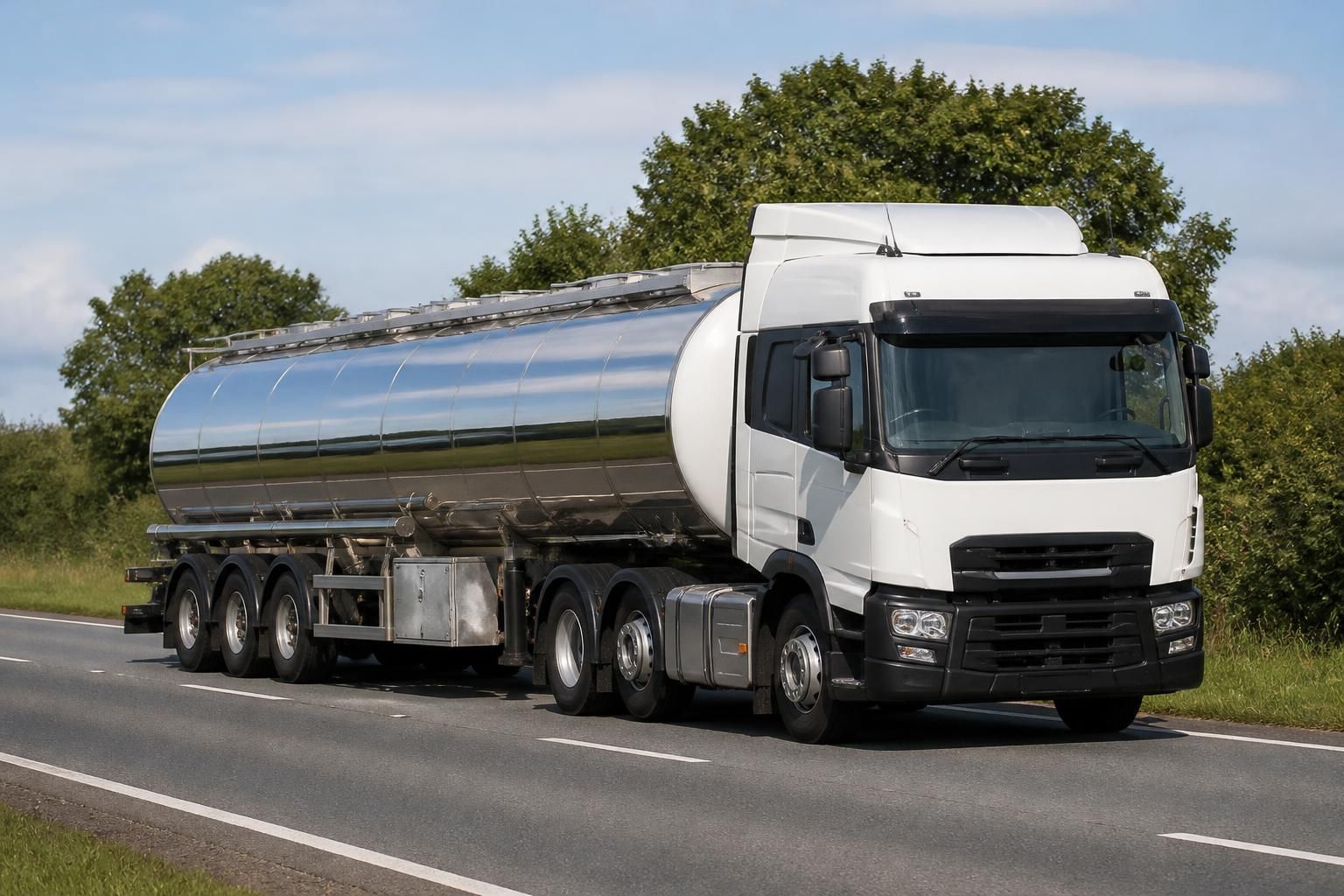
Tanker insurance is motor cover for a lorry or trailer built to carry liquids or dry powders in bulk, together with the extra protection a tanker operation tends to need, such as pollution clean-up and cover for the product on board. Insurers rate it on what goes in the barrel. Heating oil, chemicals, milk and cement powder each bring different spill, contamination and handling risks, and anything classed as dangerous goods is declared to the insurer.
Tanker cover at a glance
- The product carried matters as much as the vehicle, and insurers expect hazardous loads to be declared when cover is arranged.
- Drivers moving dangerous goods need the relevant dangerous goods training, and insurers may ask to see it.
- Many policies pay for sudden, accidental spills but not for slow leaks that build up over time.
- Contaminating a customer's tank or a load of milk can be a costly claim on its own.
- A distributor delivering its own fuel is insured differently from a haulier moving tankers for customers.
What tanker insurance covers
A tanker policy starts with the usual motor sections for the vehicle, then adds the risks that come from carrying bulk liquids and powders. The extras vary a lot between insurers.
Tanker types and what insurers look at
A rigid delivering heating oil to village homes and an artic carrying acids between plants share a shape, but little else from an insurer's point of view.
| Tanker | Typical loads | What insurers look at |
|---|---|---|
| Rigid fuel tanker with hose reel | Heating oil, diesel and kerosene delivered to homes, farms and sites | Metered deliveries, overfill controls, narrow rural roads |
| Artic chemical tanker | Acids, solvents and other hazardous liquids between industrial sites | Product classes, driver dangerous goods training, distances run |
| Food-grade liquid tanker | Milk collected from farms, juices, edible oils and liquid sugar | Wash records, dedicated food use, value of each load |
| Bulk powder tanker | Cement, flour, animal feed and plastic pellets blown off by air pressure | Discharge equipment, tank testing, dust and blockage risks |
Tanker trailers pulled by a tractor unit also need the unit itself insured, through artic lorry insurance and HGV trailer insurance. Ready-mixed concrete, as opposed to dry cement powder, is covered on the concrete mixer lorry insurance page.
Delivering your own product or hauling for others
Who owns the liquid or powder in the barrel shapes the class of use, the goods cover and the liability a tanker operator carries.
Own goods tankers
Fuel distributors, dairies, feed mills and cement producers delivering their own product usually insure for carriage of own goods. The stock is theirs, so it is often protected under a business or stock policy. More on own goods cover.
Haulage tankers
Moving chemicals, fuel or food liquids that belong to customers needs haulage use and cover for the product while it is in your care, as covered under haulier insurance.
Which class of use covers carrying a customer's fuel or milk for payment?
- NoSocial, domestic and pleasureNot suited to any tanker work.
- NoCarriage of own goodsYour own fuel, feed or product, delivered by your own drivers.
- YesHaulage, or hire and rewardCustomers' liquids or powders carried in bulk for a fee.
Details brokers often request
For tankers on hazardous work, brokers usually want to know the products and their hazard classes, which drivers hold dangerous goods training, and how often the barrels are tested and inspected. Food-grade operators may be asked about cleaning and wash records. Having these ready helps when you start a tanker quote (opens in a new tab).
What affects the price of tanker insurance
Tanker premiums follow the load more closely than with most lorries, because the cargo decides how bad an accident can get.
On the move
A part-filled barrel lets liquid surge forward under braking and sideways on bends. Baffles and separate compartments calm that movement, and drivers trained for it reduce the chance of a rollover.
At the delivery point
Hoses, couplings, overfill alarms and the care taken when connecting to a customer's tank all shape the spill and contamination risk.
- What is carriedFlammable, toxic or corrosive products are viewed very differently from water, milk or animal feed.
- Driver training and experienceDangerous goods training, tanker experience and a clean licence count in your favour.
- Tank constructionBaffles, compartments, rollover protection and valve guards all feature in the assessment.
- Pollution limits wantedHigher limits for clean-up costs can be requested, usually at extra cost.
- Claims historyPast spills or contamination claims weigh heavily alongside ordinary motor claims.
- Number of tankersSeveral tankers can be grouped on HGV fleet insurance.
Cover that often sits alongside tanker insurance
Some expensive tanker incidents happen at a customer's tank or yard rather than on the road. These covers pick up what the motor policy may leave.
Before you buy
Questions worth asking about tanker cover
Tanker policies can look alike until a spill or a contaminated load tests them. The points below are best settled with a broker while the policy is still being put together.
- Are all the products you carry declared?An undeclared hazardous load could leave a claim in doubt.
- How is pollution covered?Some policies respond only to sudden and accidental releases, with a set limit for clean-up.
- Is gradual leakage excluded?Slow seepage from a valve or pipe over weeks is often outside cover.
- Is contamination of a customer's tank included?Delivering the wrong product into storage can be a large claim.
- Is the product on board covered?Own stock and customers' goods are often insured in different places.
- Are deliveries off the road covered?Some motor policies cover spills during loading and delivery; others leave them to liability cover, which may exclude vehicle-related pollution.
- Who can drive?Named drivers, dangerous goods training and minimum tanker experience vary by insurer.
- Does the class of use match?Own product deliveries and haulage for customers are declared differently.
How it works
How to get a tanker insurance quote
HGV Insure is an information site, not an insurer or a broker. We link you to MyMoneyComparison.com, a comparison service that can put tanker operators in touch with specialist brokers.
- 1
The quote form
Get my tanker quote takes you to MyMoneyComparison.com, our comparison service.
- 2
Your tanker and the work
The form asks about the vehicle, its weight and body type, your operator licence and who drives. The broker then follows up on products carried and spill cover.
- 3
Options from a broker
A broker who handles tanker risks gets in touch with any options available, subject to insurers' acceptance criteria. Nothing obliges you to buy.
FAQs
Tanker insurance FAQs
What is tanker insurance?
It is cover for a rigid lorry or trailer fitted with a tank for bulk liquids or powders. It joins HGV motor insurance with the extra cover tanker work tends to need, such as pollution clean-up and protection for the load.
Do I have to tell my insurer I carry hazardous goods?
Yes. Fuel, chemicals and other dangerous goods change the risk considerably, so the products and their hazard classes are declared when cover is set up and whenever they change. Leaving a hazardous load out could affect a claim.
What training do tanker drivers need?
Drivers carrying dangerous goods in a tanker in the UK need the relevant dangerous goods training, with a certificate that is renewed periodically. Insurers commonly ask for proof, and some also look for tanker experience.
Does tanker insurance cover pollution?
Many policies cover sudden and accidental pollution, such as a spill after a crash, up to a stated limit. Gradual pollution from slow leaks is commonly excluded. Spills during loading or delivery are picked up by some motor policies, while others leave them to public liability (opens in a new tab), which may itself exclude pollution linked to a vehicle.
Why does load surge matter to insurers?
Liquid in a part-filled tank moves when the tanker brakes or turns, which can push the vehicle forward or tip it on a bend. Baffles and compartments reduce that movement, and insurers take the tank design and driver training into account.
Is contamination of a load covered?
It varies. Some policies cover delivering the wrong product into a customer's tank or spoiling a food-grade load, while others exclude it or set a lower limit. Goods in transit (opens in a new tab) cover for bulk liquids may also have its own conditions.
Are bulk powder tankers insured like liquid tankers?
Broadly, yes, as both are rated on the load and the discharge equipment. Cement, flour and feed carry less pollution risk than fuel, but contamination, blockages and pressure equipment still come up. Cement delivered ready-mixed is a different vehicle, dealt with under concrete mixer lorry insurance.
Is fuel tanker insurance different for a distributor and a haulier?
Yes. A distributor delivering its own fuel usually insures for carriage of own goods, while a haulier moving fuel for customers needs haulage use and goods cover for the product, as explained under own goods cover.
Can a tanker trailer be insured separately?
Yes. Tanker trailers can be insured on their own or alongside the tractor units that pull them, as set out on the HGV trailer insurance page.
Does HGV Insure sell tanker insurance?
No. HGV Insure is an information site and a trading style of Mymoneycomparison.com Ltd, the company behind MyMoneyComparison.com, which matches operators with specialist brokers. When you start a quote you continue to MyMoneyComparison.com, where quote requests are subject to insurers' acceptance criteria.
Ready to get your tanker covered?
One form, brokers who know tanker risks, no obligation.
Get my tanker quote (opens in a new tab)