
Drawbar cover
Drawbar lorry insurance for the rigid and the trailer behind it
Box, curtain, swap body and hook loader drawbar outfits. One short form connects you with specialist brokers.
- Rigid and trailer together
- Own goods or haulage
- One outfit or a fleet
Quick answer
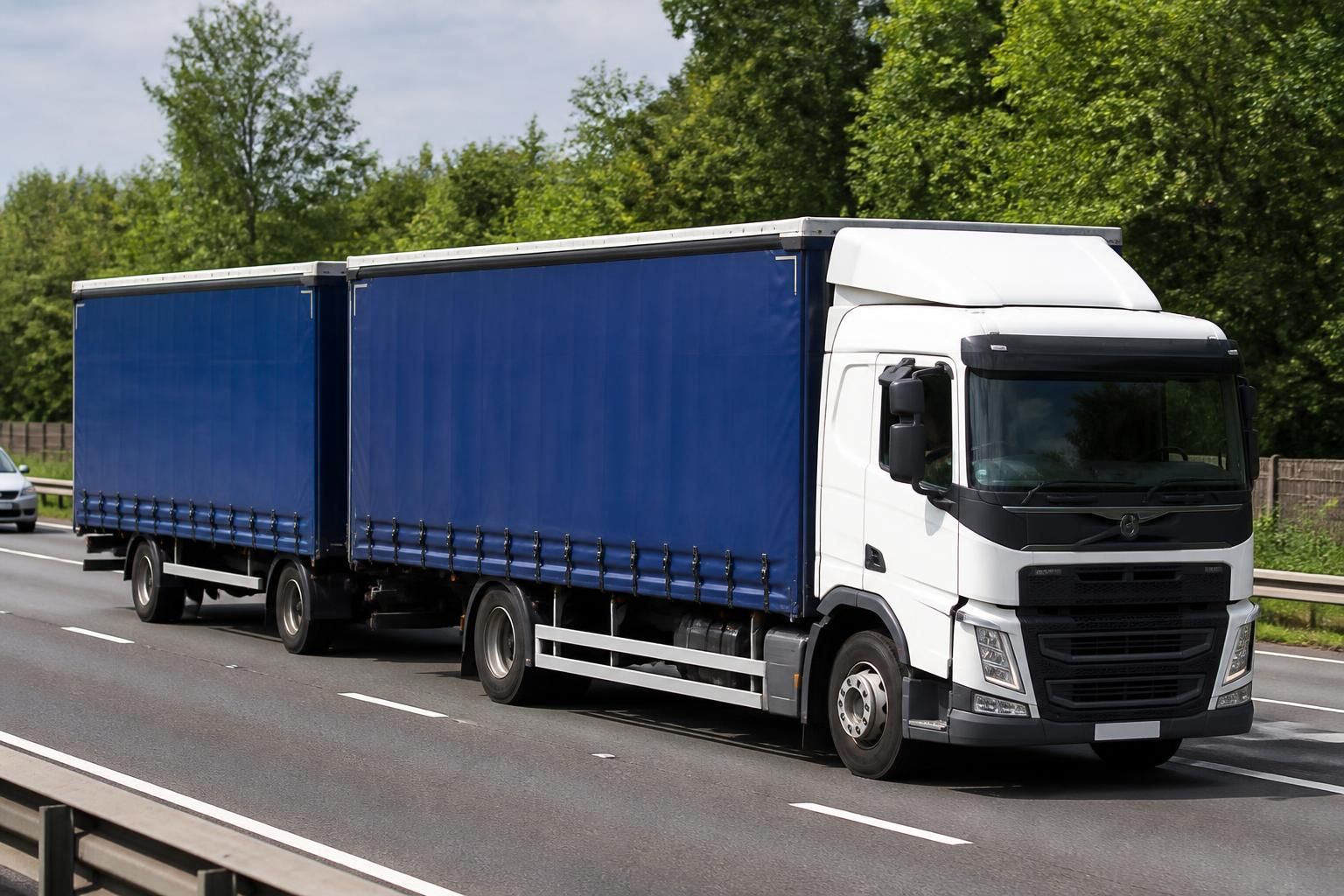
Drawbar lorry insurance is HGV cover for a rigid lorry that tows a separate load-carrying trailer on a drawbar, giving load volume on a par with an artic while keeping a rigid's own body. The motor policy on the rigid normally answers for third parties while the trailer is hitched up, but damage to the trailer itself, and the trailer when it is parked on its own, often has to be added or insured separately. Class of use, the drivers' experience with drawbars and any customers' freight on board all shape the cover.
Drawbar cover at a glance
- The rigid and the drawbar trailer are separate vehicles, and insurers usually want both listed with their values.
- Liability for a trailer while coupled tends to follow the towing lorry; damage to the trailer is a separate question.
- Drivers need C+E entitlement to tow a full-size drawbar trailer, and insurers often ask how long they have held it.
- Reversing and coupling a drawbar take practice, so yard and depot incidents feature in underwriters' thinking.
- Swap bodies and spare trailers left standing at depots or customers' sites may need their own cover.
What drawbar lorry insurance covers
A drawbar policy has to deal with a combination that is often split up during the working day. These are the parts brokers usually talk through.
Drawbar outfit types and what insurers look at
The body on the rigid and the style of trailer behind it tell an insurer a lot about the freight, the routes and the value at stake.
| Drawbar outfit | Typical work | What insurers look at |
|---|---|---|
| High-cube box drawbar | Light, bulky freight such as parcels, packaging, textiles and furniture | Value of loads, overnight parking, rear door security |
| Curtain drawbar | Palletised goods with side loading by forklift at each end | Curtain theft risk, load restraint, damage in busy yards |
| Demountable swap body drawbar | Bodies dropped on legs at depots for loading while the lorry works elsewhere | Cover for bodies left standing, legs and locking points, number of bodies |
| Hook loader drawbar | Roll-on containers of waste, scrap or aggregates on both the lorry and the trailer | Hook arm value, tipping, waste carrier details |
Single-body versions are covered on our box lorry insurance, curtainside lorry insurance and hook loader insurance pages.
Moving your own goods or hauling for others
Plenty of drawbar outfits run for retailers, manufacturers and distributors who move their own stock between sites. Others are run by hauliers on contract work. The difference sets the class of use on both halves of the outfit.
Own goods drawbars
A business shuttling its own products between a factory and a warehouse usually declares carriage of own goods, explained further under own goods cover.
Contract and general haulage
Pulling freight for paying customers needs haulage use, and the goods on board are the customer's, not yours. More on this under haulier insurance.
Which class of use fits a drawbar carrying customers' freight for payment?
- NoSocial, domestic and pleasureNot suited to a working drawbar outfit.
- NoCarriage of own goodsFine for your own stock, but not for loads you are paid to move.
- YesHaulage, or hire and rewardCustomers' freight moved on either the rigid or the trailer for a fee.
Licence and trailer details brokers ask for
A standard category C licence only covers a rigid towing a light trailer, so anyone driving a loaded drawbar outfit needs C+E. Brokers usually ask for each driver's licence history and the trailer's identification, and trailers above light weights have their own annual test, so recent test certificates are handy when you begin a drawbar quote (opens in a new tab).
What affects the price of drawbar lorry insurance
An insurer prices a drawbar outfit as a pair: the rigid, the trailer and the way the two are handled together.
Handling the combination
Reversing a turntable trailer, coupling in tight yards and tracking round roundabouts and junctions on longer routes.
Assets and freight
The value of the rigid, the trailer and any swap bodies, plus the type and worth of the loads carried.
- Driver experienceYears holding C+E and time spent on drawbars, rather than artics, can both count.
- Trailer typeClose-coupled centre-axle trailers and turntable trailers behave differently when reversed.
- Number of bodies or trailersSpare trailers and swap bodies add value to insure and more places for damage to happen.
- Where outfits stand overnightSecure depots are viewed differently from lay-bys and unlit industrial estates.
- Claims recordLow-speed manoeuvring knocks, as well as road accidents, show up in a claims history.
- Fleet sizeSeveral outfits can be grouped on HGV fleet insurance, with trailers listed alongside.
Cover that often sits alongside drawbar insurance
A drawbar operation tends to need more than the motor policy on the rigid. These covers fill the common gaps.
Before you buy
Questions worth asking about drawbar cover
Drawbar policies often differ in how they treat the trailer. These points are worth settling with the broker before the outfit goes on the road.
- Is the trailer named on the policy?Some insurers want each drawbar trailer listed with its identification and value.
- Is towing permitted on the rigid's policy?Third party cover for the trailer usually depends on the rigid's policy allowing it.
- Is the trailer covered when uncoupled?Trailers parked at a depot or a customer's site may sit outside the motor cover.
- Are swap bodies included?Demountable bodies standing on legs can be treated as equipment rather than vehicles.
- Which drivers can tow?Policies may set minimum ages, C+E experience or named drivers for the combination.
- Are coupling and reversing incidents covered?Damage done while hitching up or backing into a bay is a common source of small claims.
- Do goods in transit limits suit both halves?A loaded trailer adds considerably to the value on the road.
- Does recovery cover the whole outfit?Some breakdown plans only cover the towing vehicle, leaving the trailer stranded.
How it works
How to get a drawbar lorry insurance quote
HGV Insure is an information site, not an insurer or a broker. We link you to MyMoneyComparison.com, a comparison service that can put drawbar operators in touch with specialist brokers.
- 1
The quote form
Get my drawbar quote takes you to MyMoneyComparison.com, our comparison service.
- 2
Your drawbar outfit and the work
The form asks about the rigid, its weight and body, your operator licence and who drives. The broker follows up on the trailer, any swap bodies and the freight.
- 3
Options from a broker
A specialist broker gets in touch with drawbar cover options, subject to insurers' acceptance criteria. There is no obligation to buy.
FAQs
Drawbar lorry insurance FAQs
What is a drawbar lorry?
It is a rigid lorry with its own load body that tows a separate trailer through a drawbar and towing eye, an outfit also known in the trade as a wagon and drag or a truck and trailer. Unlike an artic, the towing vehicle carries freight too, which gives a large load volume for light, bulky goods.
Does my rigid lorry policy cover the drawbar trailer?
Usually only partly. Liability to others while the trailer is attached tends to come from the rigid's policy, provided towing is allowed. Damage to the trailer itself, or theft of it, normally has to be added or placed on HGV trailer insurance.
What licence is needed to drive a drawbar outfit?
A category C licence covers a rigid towing only a light trailer. Towing a full-size drawbar trailer needs C+E, the same category as an articulated lorry.
Can I insure the drawbar trailer on its own?
Yes. Many operators insure trailers separately, especially when one trailer is swapped between several rigids or left standing for loading.
Are swap bodies treated as trailers?
Not always. A demountable body on legs has no wheels of its own, so some insurers treat it as equipment and others list it alongside the vehicles. The broker can confirm how each body is covered while standing and while carried.
Why do insurers ask about reversing a drawbar?
A turntable trailer pivots at the drawbar and steers on a turntable front axle, which makes reversing awkward and jack-knifing more likely. Knocks in yards and loading bays are a common type of claim on these outfits.
Is a hook loader with a drawbar trailer insured differently?
The principles are the same, but the hook arm, the containers and waste carrier details come into play, and our hook loader insurance page covers the detail.
Do I need goods in transit cover on a drawbar?
If you carry freight belonging to customers, it is commonly expected. The limit needs to reflect a fully loaded rigid and trailer together, as our goods in transit insurance (opens in a new tab) page explains.
Does HGV Insure sell drawbar lorry insurance?
No. HGV Insure is an information site and a trading style of Mymoneycomparison.com Ltd, the company behind MyMoneyComparison.com, which matches operators with specialist brokers. When you start a quote you continue to MyMoneyComparison.com, where quote requests are subject to insurers' acceptance criteria.
Ready to insure your drawbar outfit?
One form, specialist HGV brokers, no obligation.
Get my drawbar quote (opens in a new tab)